
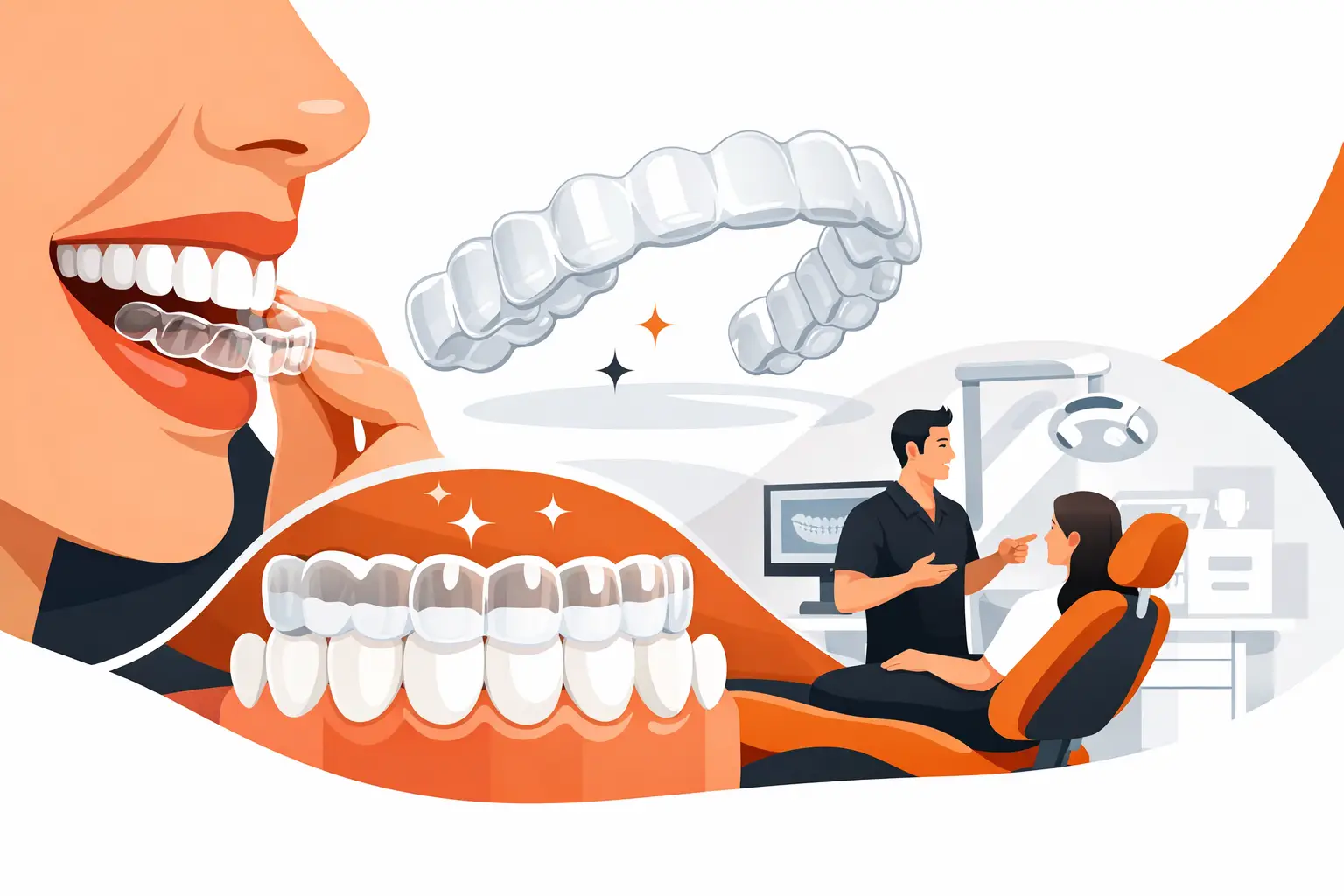
Invisalign Pakenham: What to Expect
21 July 2026 | Blog
If you are looking into Invisalign options, you are probably weighing up more than just straight teeth. For many adults and teens, the real question is whether treatment will fit around work, school, family life and the day-to-day reality of eating out, talking confidently and keeping dental care manageable. A trusted Pakenham dentist can help you weigh up these questions properly, rather than relying on guesswork.
Invisalign is a clear aligner system used to move teeth gradually over time. Instead of fixed brackets and wires, treatment uses a series of custom-made plastic aligners that are changed in sequence. Each set is designed to make small movements, and those movements build toward the planned result.
For some people, that sounds straightforward. In practice, whether Invisalign is suitable depends on your bite, the position of your teeth, your oral health and how consistently you can wear the aligners. That is why a proper assessment matters more than any online checklist.
How Invisalign works
Invisalign treatment starts with an examination and treatment planning process. Your dentist checks the health of your teeth and gums first, because active decay or gum disease usually needs attention before orthodontic treatment begins. Records such as scans, photos or X-rays may also be used to assess tooth position and bite.
Once a plan is developed, a series of aligners is made to fit your teeth at each stage. You wear the aligners for most of the day, usually removing them for meals, hot drinks and brushing. Over time, the aligners apply controlled pressure to move the teeth.
This approach can be appealing because the aligners are clear and removable. That said, removable treatment also comes with responsibility. If aligners are not worn as directed, teeth may not track as planned, treatment can slow down and additional refinement may be needed.
Who Invisalign may suit
Invisalign can be appropriate for many common orthodontic concerns, including mild to moderate crowding, spacing and some bite issues. It is often considered by adults who want a more discreet option than traditional braces, and by older teens who are likely to follow the wear instructions consistently.
Still, not every case is the same. Some people have more complex tooth movements, jaw relationships or bite problems that may be better managed with braces or another orthodontic treatment. In other situations, Invisalign may still be possible, but treatment may take longer or involve additional attachments, elastics or refinement aligners.
Invisalign Pakenham consultations: what usually happens
If you book a consultation for Invisalign in Pakenham, the first appointment is usually focused on assessment and planning rather than immediate treatment. This is the stage where you can ask practical questions and get a realistic picture of what your case may involve.
Your dentist may discuss the alignment issues you want to improve, whether your bite needs correction, how long treatment may take and whether any dental work should be completed first. If you have fillings, crowns, gum concerns or wisdom teeth questions, those may also be relevant to planning.
For local families and working adults, convenience often matters just as much as treatment mechanics. Seeing a provider who can assess general dental health and cosmetic concerns in one place may make planning simpler, especially if more than one issue needs attention before aligners begin.
Benefits and trade-offs to think about
The obvious benefit of Invisalign is appearance. The aligners are clear, so they are generally less noticeable than fixed braces. Many people also like being able to remove them for meals and oral hygiene.
Comfort and convenience can be advantages too, but they are not absolute. Some patients find aligners easier to manage than brackets and wires, while others find the routine demanding. Because you need to remove aligners before eating and clean your teeth before putting them back in, treatment asks for consistency.
There are also trade-offs around discipline and visibility. Fixed braces work all the time because they stay on your teeth. Invisalign only works when it is worn. If your job involves frequent snacking, long coffees or unpredictable shifts, that may affect how easy the system feels in real life.
How long does Invisalign take?
Treatment time varies. Some cases are relatively short, while others take well over a year. The complexity of the tooth movement, how well the teeth respond and how closely the aligners are worn all play a part.
It is also worth knowing that the first estimate is just that - an estimate. Teeth do not always move exactly as predicted, and some patients need extra aligners at the end to refine the result. That does not mean treatment has failed. It simply reflects the fact that orthodontic movement is biological and can vary between individuals.
Retention matters as well. Once active treatment is finished, retainers are typically needed to help maintain the new tooth positions. Without retention, teeth can shift over time.
Costs and payment questions
Cost is one of the most common questions about Invisalign Pakenham treatment, and understandably so. Pricing can vary depending on the complexity of the case, the length of treatment, the number of aligners required and whether additional dental treatment is needed beforehand.
A simple cosmetic alignment concern may involve a different fee structure from a more comprehensive bite correction. This is why a general price range online is rarely enough to make a useful comparison.
When discussing fees, it helps to ask what is included. You might want to clarify whether the quoted amount covers scans, review appointments, attachments, refinements and retainers. If you have private health insurance, your level of extras cover may also affect out-of-pocket costs. Some practices offer payment plans, which can make treatment easier to budget for, but it is still important to understand the full cost of care.
Daily life with clear aligners
Most people settle into the routine after the first week or two. Speech may feel slightly different at first, and there can be pressure or tenderness when switching to a new aligner set. That is a common part of tooth movement, although everyone experiences it differently.
Daily care is fairly simple but does require attention. Aligners should be kept clean, and teeth need regular brushing and flossing. Leaving aligners out for long periods, storing them poorly or putting them back onto unclean teeth can create problems.
For parents considering aligners for a teenager, maturity is often a key factor. A removable system can work well for young people who are motivated and organised. If aligners are repeatedly misplaced or left out, fixed braces may be easier to manage.
Questions worth asking before you start
A good Invisalign consultation should leave you with clear, practical information. Useful questions include:
- Is Invisalign likely to suit my bite and alignment concerns?
- Are there any oral health issues that need treatment first?
- How long might my case take, and what could change that timeline?
- What is included in the fee?
- Will I need attachments, elastics or retainers?
- What happens if refinement aligners are required?
- How often will review appointments be needed?
These questions are not about pushing towards treatment. They are about helping you make an informed choice based on your own priorities, budget and dental health.
When another option may be better
Clear aligners are popular, but popularity is not the same as suitability. In some cases, braces may allow for more predictable control of certain tooth movements. In others, a patient may decide that the discipline of removable aligners does not suit their lifestyle.
There are also times when the concern is less about alignment and more about shape, wear or colour. If that is the case, other cosmetic or restorative treatments may be discussed as part of a broader plan. The right path depends on what you are trying to improve and what your mouth needs clinically.
At a local practice such as Integrated Dental Care, that wider view can be helpful because orthodontic planning does not happen in isolation from general dental health.
FAQs about Invisalign Pakenham
Is Invisalign painful?
Invisalign can cause pressure or mild discomfort, particularly when starting a new set of aligners. That feeling is usually temporary and related to tooth movement. If pain seems significant or persistent, it is sensible to contact your dental provider.
Can I eat with Invisalign in?
Aligners are generally removed for meals and most drinks other than plain water. Eating with them in may damage or stain the aligners.
How many hours a day do I need to wear them?
Your dentist will give specific instructions, but aligners generally need to be worn for most of the day to work as planned. Wearing them less than advised may delay treatment.
Is Invisalign only for adults?
No. Invisalign may suit some teenagers as well as adults, provided the case is appropriate and the aligners are likely to be worn consistently.
Will I need retainers after treatment?
Most patients need retainers after active orthodontic treatment to help maintain tooth position. Your dentist can explain the type of retainer recommended and how often it should be worn.
If you are considering Invisalign, the most useful next step is not to compare perfect-looking smiles online. It is to get personalised advice, understand the trade-offs and choose a plan that fits both your dental needs and your everyday life.
Ready to find out if Invisalign is right for you? [Book a consultation] (https://integrateddental.com.au/contact-dentist-pakenham/) with the team at Integrated Dental Care, your local Pakenham dentist, and get a clear, personalised plan for your smile.
Disclaimer
The information provided on this website is for general informational and educational purposes only. It is not intended to replace professional dental advice, diagnosis or treatment. Dental needs and treatment outcomes vary between individuals. Always seek advice from a qualified dental practitioner regarding your specific circumstances before making decisions about your oral health or treatment. A consultation and clinical assessment are required to determine which treatment options may be suitable for you. All dental procedures carry potential risks and benefits, which will be discussed with you before treatment.