
Invisalign vs Braces for Adults: Comparing Teeth Straightening Options
13 July 2026 | Blog
Choosing orthodontic treatment as an adult often comes down to more than straightening teeth. The search for “invisalign vs braces adults” usually reflects practical questions: Will it suit work meetings? How much care is involved? Can it manage a complex bite? And what happens once treatment ends?
Both Invisalign clear aligners and fixed braces can move teeth gradually using controlled orthodontic forces. Neither is automatically the right choice for every adult. Your teeth, bite, gum health, lifestyle and willingness to follow the treatment plan all affect which option may be appropriate.
Invisalign vs braces for adults: the key differences
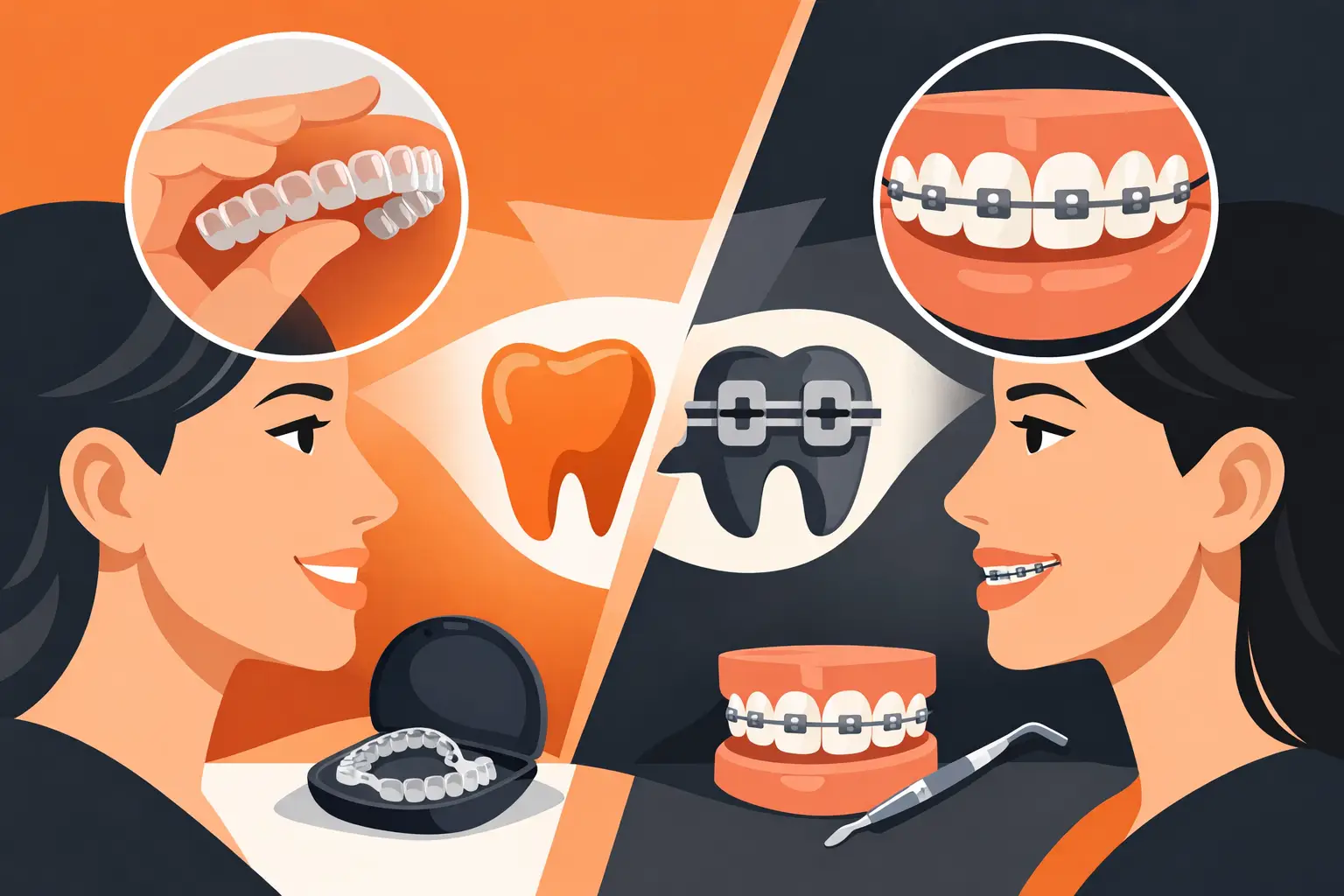
Invisalign treatment uses a series of clear, removable plastic aligners made specifically for your teeth. You wear each set for a prescribed period before changing to the next set. Small tooth-coloured attachments may be placed on some teeth to help the aligners grip and guide movement.
Traditional braces use brackets bonded to the teeth and a wire that is adjusted over time. They remain in place throughout active treatment, apart from any components changed or adjusted by the dental team.
| Consideration | Invisalign clear aligners | Fixed braces |
|---|---|---|
| Appearance | Clear and less noticeable from a short distance | Brackets and wires are visible, although ceramic options may be less noticeable |
| Removal | Removed for eating, drinking anything other than water, and cleaning | Remain attached during treatment |
| Daily responsibility | Must be worn as directed, often close to full-time | Less dependent on remembering to wear an appliance |
| Cleaning | Aligners are removed to brush and floss normally | Brushing around brackets and wires takes more care |
| Food choices | Aligners are removed before meals | Some hard, sticky or chewy foods may need to be avoided |
| Suitability | Can treat many mild to complex concerns, depending on the case | Often suitable for a broad range of tooth and bite movements |
Which treatment is suitable for your teeth and bite?
Clear aligners may be an option for adults with mild to moderate crowding, gaps, relapsed orthodontic treatment, or certain bite concerns. They can also be used in more complex cases, sometimes alongside attachments, elastics or other orthodontic techniques. However, the fact that aligners are clear does not mean they are suitable for every situation.
Fixed braces can provide consistent control because they are attached to the teeth at all times. They may be recommended where significant rotations, vertical tooth movements, complex bite changes or difficult tooth positions need to be managed. This is not a rule, though. Treatment planning is individual, and the clinician will assess what can be achieved safely and predictably.
Before either option is considered, your teeth and gums need to be healthy enough for orthodontic movement. Untreated decay, active gum disease, poorly fitting restorations, missing teeth or jaw concerns may need attention first. Adults can have successful orthodontic treatment, but existing dental work and gum health need careful planning.
Appearance matters, but so does wear time
For many adults, discretion is the main appeal of Invisalign aligners. They can be removed for a presentation, meal or special occasion. The trade-off is responsibility. Aligners generally need to be worn for most of the day and night, following the instructions provided by your clinician. Taking them out frequently, forgetting to put them back in, or changing trays outside the planned schedule can affect progress.
Braces are more visible, but they do not rely on daily wear-time decisions. For someone with a busy routine, frequent snacking, shift work or a tendency to misplace removable items, fixed braces may feel simpler. Ceramic brackets may be worth discussing if appearance is a concern, although they are still visible up close.
Eating, cleaning and everyday comfort
With clear aligners, you remove the trays before eating and usually before drinking tea, coffee, soft drink or wine. This helps reduce staining and avoids trapping food and sugars against the teeth. Brush your teeth before reinserting the aligners where possible, and clean the aligners as instructed. Leaving them in hot water or a hot car can distort the plastic.
Braces require a different routine. Food can collect around brackets and wires, so thorough brushing is essential. Interdental brushes, floss threaders or water flossers may help clean hard-to-reach areas. Hard lollies, popcorn, chewy lollies and some crunchy foods can damage brackets or wires, potentially leading to an unplanned appointment.
Both options may cause temporary pressure or tenderness after an adjustment or when moving to a new aligner. Braces can also rub against the inside of the lips or cheeks, particularly early in treatment. Orthodontic wax may help with irritation. Ongoing pain, a loose bracket, a sharp wire or aligners that do not fit properly should be discussed with your dental clinic.
Treatment time and the importance of retainers
It is understandable to ask which option is faster. In reality, treatment time depends mainly on the starting position of your teeth, the bite changes required, biological response and how closely the treatment plan is followed. Some cases take months, while more complex treatment can take longer. An estimate can be provided after an examination and planning records, but it remains an estimate rather than a guarantee.
Clear aligner treatment may involve refinements, meaning additional aligners are made to fine-tune tooth positions after the initial series. Fixed braces may require regular adjustments and, in some cases, additional appliances. Neither treatment should be judged solely by the number of appointments or the advertised treatment duration.
Once teeth have been moved, retainers are usually needed to help maintain their new positions. Teeth can shift throughout life, including after orthodontic treatment. Retainers may be removable, fixed behind the teeth, or a combination of both. Wearing and looking after retainers as advised is an important part of long-term care.
Cost considerations for adult orthodontics
The cost of Invisalign or braces varies with the complexity of treatment, the type of appliance, records and planning, reviews, refinements, retainers and any dental work needed before treatment. It is helpful to ask for a written treatment plan that explains what is included and what may create additional costs.
Private health insurance may contribute towards orthodontic treatment depending on your level of cover, annual limits and lifetime orthodontic limits. Waiting periods can apply. Payment plans may also be available, but it is sensible to understand the total cost, terms and eligibility before making a decision.
Questions to discuss at your consultation
A useful orthodontic consultation is not only about choosing the least noticeable option. Ask what each treatment can realistically address in your case, how often reviews are likely to be needed, whether attachments or elastics are expected, and what retention plan is recommended afterwards.
You can also discuss how existing crowns, veneers, implants or missing teeth may influence planning. Dental implants do not move with orthodontic treatment, so they need particular consideration. If you have a history of gum disease, regular periodontal care may be needed during treatment.
At Integrated Dental Care in Pakenham, an assessment can help clarify whether clear aligners, braces or another approach is appropriate for your oral health and treatment goals.
Frequently asked questions
Are Invisalign aligners more comfortable than braces?
Both can cause pressure as teeth move. Some people prefer the smooth surface of aligners because there are no brackets or wires against the cheeks. Others find the routine of removing and reinserting aligners inconvenient. Comfort is personal and can change during treatment.
Can adults have braces if they have crowns or fillings?
Often, yes. Brackets may be attached to restored teeth, but the type and condition of each restoration need assessment. Crowns, bridges and fillings can affect how treatment is planned, and older dental work may need review before or after orthodontic treatment.
Do clear aligners work if I only wear them at night?
Generally, no. Clear aligners are designed to be worn for the daily duration prescribed by your clinician. Night-only wear is usually associated with retainers, not active tooth movement. Following the recommended wear schedule gives the treatment the best opportunity to proceed as planned.
Will I need a retainer after Invisalign or braces?
Usually, yes. Retention is commonly recommended after both Invisalign treatment and braces because teeth can move over time. Your clinician can explain the type of retainer and wear schedule suited to your situation.
The most useful choice is the one that fits your dental needs and the routine you can realistically maintain. A considered assessment gives you clearer expectations before committing to either pathway.
Disclaimer
The information provided on this website is for general informational and educational purposes only. It is not intended to replace professional dental advice, diagnosis or treatment. Dental needs and treatment outcomes vary between individuals. Always seek advice from a qualified dental practitioner regarding your specific circumstances before making decisions about your oral health or treatment. A consultation and clinical assessment are required to determine which treatment options may be suitable for you. All dental procedures carry potential risks and benefits, which will be discussed with you before treatment.