
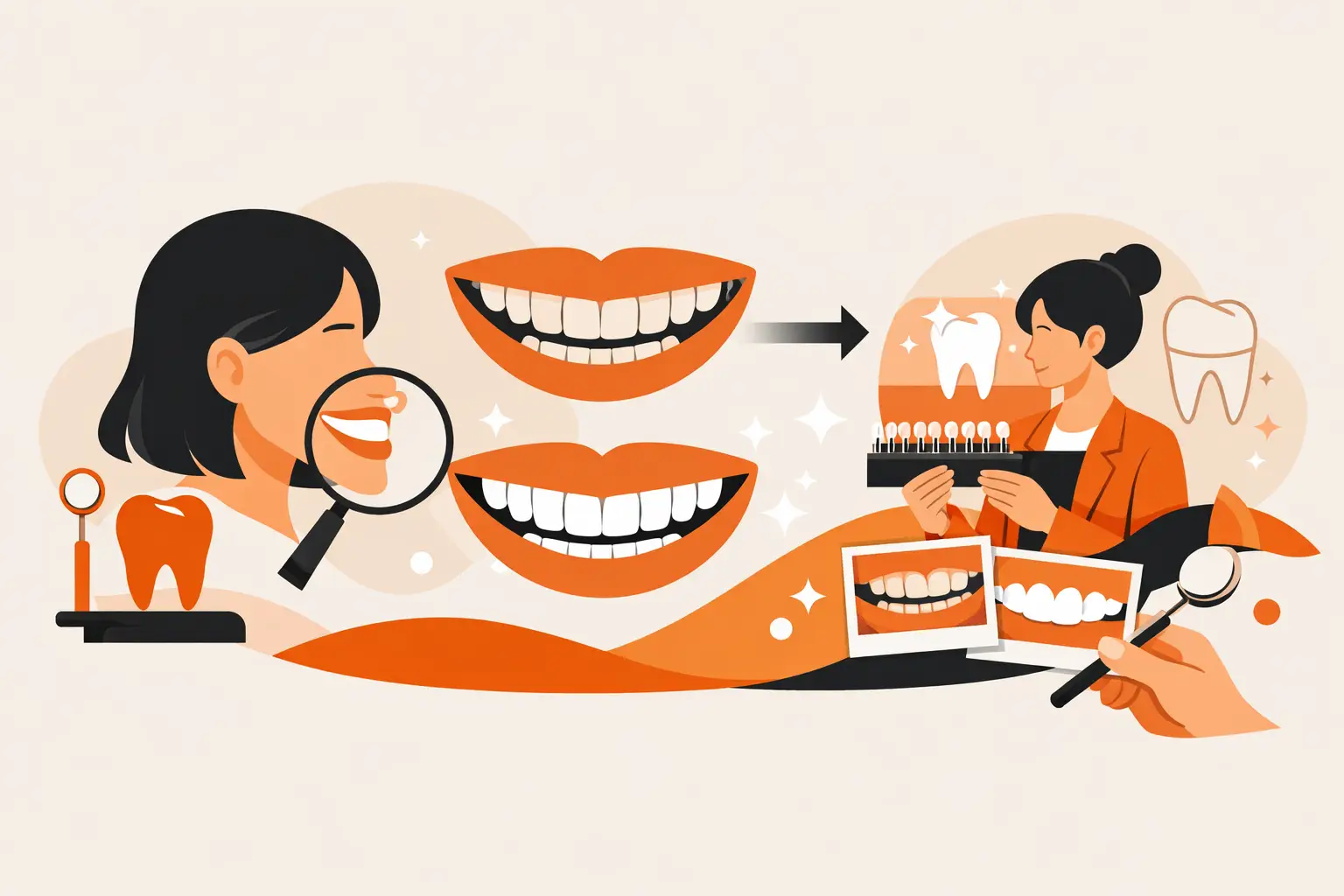
Cosmetic Dentistry Smile Makeover Explained
13 July 2026 | Blog
A cosmetic dentistry smile makeover is rarely about changing everything at once. More often, it starts with one concern that has bothered someone for years – a front tooth that chips easily, staining that does not respond to whitening, or teeth that look uneven in photos. From there, the right plan depends on your oral health, your goals and what is realistic for your smile.
For many adults, the phrase sounds bigger than it needs to be. A smile makeover is not one set treatment. It is a personalised combination of dental procedures used to improve the appearance of teeth and gums, while also considering function, comfort and long-term maintenance. In some cases, the changes are minimal. In others, treatment is more involved and staged over time.
What a cosmetic dentistry smile makeover can include
A cosmetic dentistry smile makeover may involve treatments such as teeth whitening, veneers, crowns, Invisalign, braces, dental bonding, implants or gum contouring. Not every person needs a mix of procedures, and not every concern is best treated cosmetically.
For example, whitening may suit someone with healthy teeth and general staining, while veneers may be considered when the issue involves shape, size, spacing or enamel defects. If a tooth is heavily filled or structurally weakened, a crown may be more appropriate than a purely cosmetic option. Missing teeth may require restorative treatment, such as implants or bridges, before the appearance of the smile can be improved properly.
This is why a proper assessment matters. A smile makeover is not just about making teeth look whiter or straighter. It should take bite, gum health, tooth structure and existing dental work into account.
Cosmetic goals need to match dental health
Before cosmetic treatment is planned, your dentist usually needs to check for decay, gum disease, worn fillings, grinding, jaw issues and other problems that could affect the result. If these are overlooked, cosmetic work may not last as intended or may not be suitable at all.
A patient who wants veneers, for instance, may first need treatment for gum inflammation or a fractured tooth. Someone interested in whitening may be told that existing crowns and fillings will not change colour, which can affect how even the final shade looks. These are not setbacks – they are part of making an informed decision.
In a full-service clinic, it can also be easier to coordinate this care because general, restorative and cosmetic treatment planning can happen together rather than through separate referrals.
Common concerns a smile makeover may address
People seek a smile makeover for different reasons, but the usual concerns include:
- stained or discoloured teeth
- chips, cracks or worn edges
- uneven tooth shape or size
- gaps between teeth
- mild to moderate crowding
- old dental work that stands out
- missing teeth
- a smile line or gum display they feel self-conscious about
That said, the same concern can have more than one treatment pathway. A small gap might be managed with orthodontics, bonding or veneers depending on the cause, the condition of the teeth and the person’s preferences.
How treatment planning usually works
A practical smile makeover plan tends to begin with a consultation, photographs, an oral examination and sometimes X-rays or digital scans. The aim is to understand what is clinically appropriate, what changes the patient is hoping for and what limitations may need to be discussed.
At this stage, it helps to be clear about priorities. Some people want the most conservative option. Others are focused on speed, stain resistance or replacing older dental work. Budget, maintenance and treatment time all matter, so a good plan should balance appearance with practicality.
In many cases, treatment is staged. Whitening might come first, followed by alignment, then final cosmetic work such as veneers or crowns if still needed. This step-by-step approach can avoid unnecessary treatment and may produce a more balanced outcome.
Whitening before veneers or crowns
This is a common sequence because whitening affects natural tooth colour, while crowns and veneers are made to match a chosen shade. If whitening is done after those restorations are placed, the colours may no longer blend as well.
Straightening before reshaping
When teeth are crowded or protrusive, orthodontic treatment like Invisalign or braces may improve the smile with less removal of healthy tooth structure. After alignment, some patients decide they no longer want veneers at all, while others choose minor finishing work only.
How long does a cosmetic dentistry smile makeover take?
There is no single timeline. A simple makeover involving whitening and bonding may be completed relatively quickly. A more complex plan involving orthodontics, implants or multiple restorations can take months, and sometimes longer.
Healing time also matters. If gum treatment, extractions or implant placement are involved, your dentist may recommend waiting before moving to the next cosmetic stage. Although this can feel slow, it is often better than rushing into treatment before the mouth is stable.
Costs, value and what affects the total
Smile makeover costs vary widely because the term covers so many different procedures. The main factors are the number of teeth involved, the type of materials used, whether preparatory treatment is needed and how complex the planning is.
A smaller treatment plan may involve only whitening and edge bonding. A larger one may include orthodontics, several veneers or crowns, replacement of old restorations, or treatment for missing teeth. Ongoing maintenance should also be part of the discussion. Cosmetic work is not usually a set-and-forget arrangement, and some options need occasional repairs, replacement or review over time.
If cost is a concern, it is worth asking whether treatment can be staged. Addressing the most important issues first can sometimes make the plan more manageable without compromising care.
Choosing between subtle and dramatic changes
Not everyone wants a noticeably brighter or more uniform smile. Some patients prefer natural variation in tooth shape and colour. Others want a cleaner, more polished look that still suits their face and age.
Neither approach is right or wrong. The key is that the outcome should be discussed carefully, especially with treatments that are difficult to reverse. Photos, mock-ups or digital planning can be useful in some cases, but they are still guides rather than guarantees.
This is one reason conservative treatment often appeals to people who are unsure. Small adjustments can make a visible difference without committing to major changes too early.
Risks, limitations and trade-offs to understand
Cosmetic dental treatment can offer meaningful improvements, but it also has limits. Whitening may cause temporary sensitivity. Bonding can chip or stain. Veneers and crowns may eventually need replacement. Orthodontics takes time and depends on compliance. Implants require adequate bone and careful maintenance.
There is also the question of tooth preservation. Some cosmetic treatments remove more tooth structure than others. For many patients, the best option is not necessarily the fastest or most dramatic one, but the one that protects healthy teeth while meeting realistic goals.
That is why balanced advice matters. If a treatment sounds too simple for a complex problem, it is reasonable to ask about alternatives, maintenance requirements and what happens if the result falls short of expectations.
Cosmetic dentistry smile makeover FAQs
Is a smile makeover only for people with very damaged teeth?
No. Some people seek treatment for minor cosmetic concerns, while others need a broader restorative plan. The term simply refers to a personalised approach rather than a single procedure.
Can I have a smile makeover if I grind my teeth?
Possibly, but teeth grinding needs to be assessed first. It can affect which materials are suitable and whether protective measures, such as a splint, are recommended.
Will private health insurance cover it?
That depends on your level of cover and the treatment involved. Some cosmetic procedures may not be covered, while clinically necessary restorative work may attract benefits. It is sensible to check with your fund.
Are veneers always the best option?
Not necessarily. In some cases, whitening, bonding or orthodontics may be more conservative. The best option depends on your teeth, bite, goals and budget.
Can a general dentist provide a smile makeover plan?
A general dentist may assess cosmetic concerns and plan treatment, particularly in a practice that also offers restorative and orthodontic services. More complex cases may still require careful coordination and staged care.
If you are thinking about a cosmetic dentistry smile makeover, the most useful first step is not choosing a treatment from a list. It is understanding what is causing the concern, what options are clinically appropriate and what level of change feels right for you. For local patients, a clinic such as Integrated Dental Care may be able to assess both cosmetic goals and underlying dental needs in the same place, which can make planning simpler. A good smile makeover should feel considered, not rushed – and it should make sense for your teeth, not just the mirror.
Disclaimer
The information provided on this website is for general informational and educational purposes only. It is not intended to replace professional dental advice, diagnosis or treatment. Dental needs and treatment outcomes vary between individuals. Always seek advice from a qualified dental practitioner regarding your specific circumstances before making decisions about your oral health or treatment. A consultation and clinical assessment are required to determine which treatment options may be suitable for you. All dental procedures carry potential risks and benefits, which will be discussed with you before treatment.