
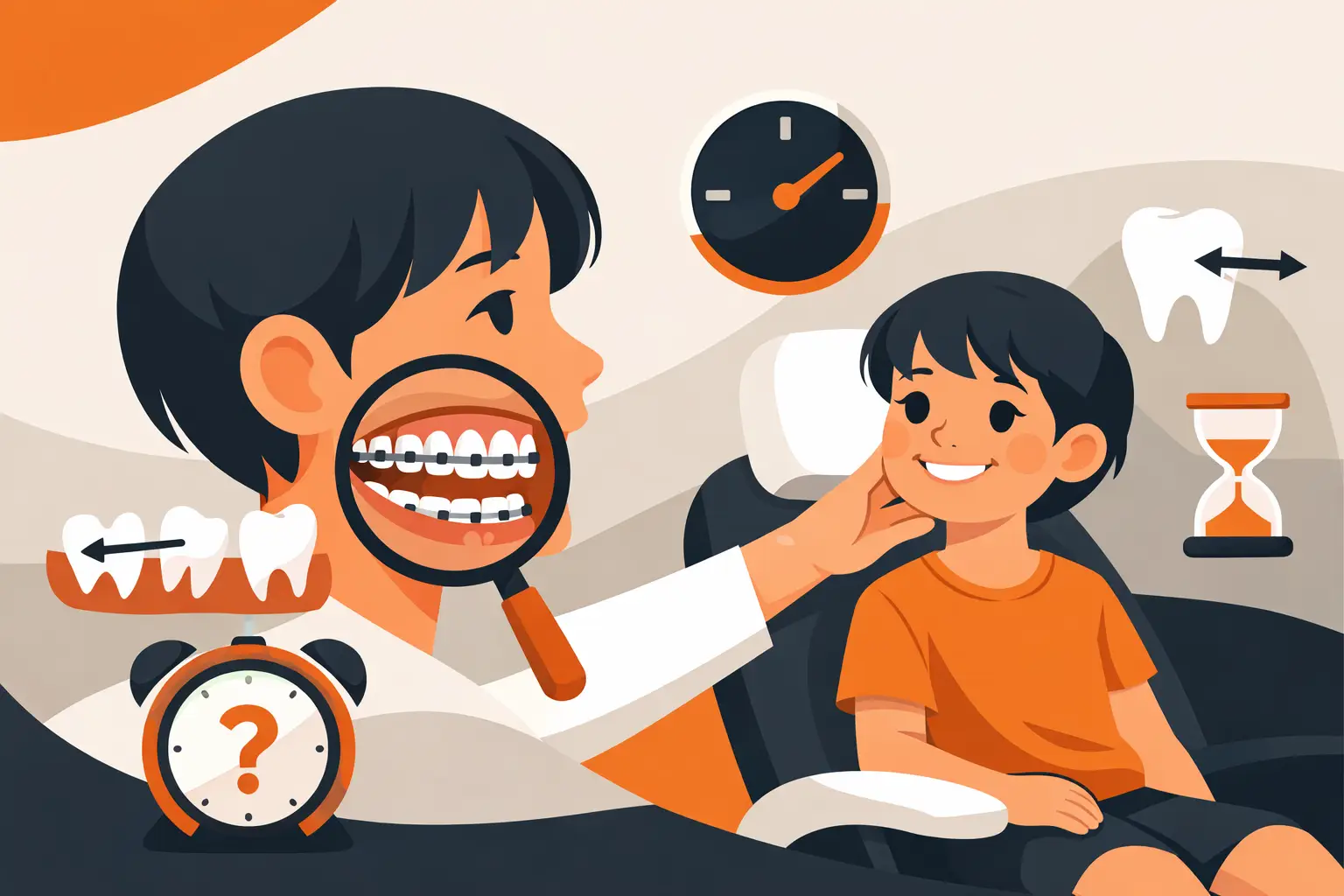
When Do Children Need Braces? Signs and Timing
28 July 2026 | Blog
A front tooth growing slightly crooked does not automatically mean a child needs orthodontic treatment. Teeth and jaws change rapidly throughout childhood, particularly as baby teeth are replaced by adult teeth. The more useful question is not simply whether teeth look straight, but whether the bite, jaw growth and tooth position are developing in a healthy and functional way.
Parents often ask, when do children need braces? The answer depends on the individual child. Some children benefit from early monitoring or treatment, while others are better assessed and treated once more adult teeth have come through. A dental examination can help identify concerns early and determine whether observation, preventative care or an orthodontic assessment is appropriate.
When should a child first have an orthodontic assessment?
An orthodontic assessment is often recommended at around age seven. This does not mean braces are usually fitted at seven. At this age, children generally have a mix of baby and adult teeth, which gives a dentist or orthodontist an early view of how the jaws are growing and whether there is enough room for incoming teeth.
An early assessment can be useful for spotting issues that may be less obvious at home, including a developing crossbite, an underbite, a significant overbite, crowding or adult teeth erupting in an unusual position. It can also identify habits, such as ongoing thumb sucking, that may be affecting the developing bite.
For many children, the outcome of this appointment is simply regular review. Their teeth may need time to erupt before any active treatment can be planned. Monitoring allows changes to be tracked without beginning treatment before it is needed.
Signs a child may need braces or orthodontic care
Tooth alignment is only one part of the picture. Braces and other orthodontic approaches may be considered when tooth or jaw positions affect function, oral health, comfort or future development.
Common signs worth discussing at a dental visit include:
- crowded, overlapping or twisted teeth
- gaps that appear unusually large or persist after adult teeth erupt
- upper front teeth that sit far forward or are more exposed to injury
- an underbite, where lower front teeth sit in front of upper front teeth
- a crossbite, where some upper teeth bite inside the lower teeth
- a deep bite, where upper front teeth cover most of the lower front teeth
- difficulty biting, chewing or speaking clearly
- jaw clicking, discomfort or a bite that feels uneven
- adult teeth that have not erupted when expected, or teeth growing in an unusual place
- ongoing thumb sucking or dummy use beyond the early childhood years.
None of these signs confirms that a child will need braces. For example, mild crowding may improve as the jaw grows, while a gap can be a normal stage of development. A clinician needs to assess the child’s age, the teeth present, growth pattern and bite before making a recommendation.
Teeth that appear crowded
Crowding is one of the most common reasons parents ask about braces. It occurs when there is not enough room in the jaw for teeth to line up comfortably. A child may have one adult tooth erupt behind another, or front teeth that overlap as they emerge.
Early crowding does not always require immediate treatment. However, it is worth assessing because severe crowding can make cleaning more difficult and may affect how later adult teeth erupt. In some cases, a dentist may discuss monitoring, space management or referral for orthodontic advice.
Bite problems and jaw position
Bite concerns can sometimes be more time-sensitive than crooked teeth. A crossbite may contribute to uneven jaw movement as a child grows. A pronounced underbite or overbite may reflect a difference in jaw development rather than the position of teeth alone.
Early intervention is occasionally considered for these concerns because a child is still growing. Yet timing remains individual. Some bite problems are best addressed in childhood, while others may be reviewed until more growth or tooth eruption has occurred. The aim is to choose an approach that suits the child’s development, not to begin treatment as early as possible.
What age do children usually get braces?
Most children who need comprehensive braces begin treatment between about nine and 14 years old. By this stage, many or all permanent teeth have erupted, and growth can still assist with certain orthodontic changes.
This is only a general guide. A child with a developing crossbite might be assessed for treatment earlier, while another child may not be ready until later because adult teeth are still erupting. Adolescents and adults can also have orthodontic treatment, so missing an early window does not necessarily mean a problem cannot be addressed.
Some children have treatment in two phases. The first phase may occur while baby teeth are still present and focus on a particular growth or bite concern. After a period of observation, a second phase may align the permanent teeth. Two-phase treatment is not needed for every child, and it is reasonable to ask why a staged approach is being recommended, what alternatives exist and what may happen if treatment is delayed.
How dentists decide whether braces are appropriate
An orthodontic assessment usually begins with a clinical examination. The clinician looks at tooth eruption, bite relationship, jaw movement, facial growth and oral hygiene. X-rays or digital scans may be recommended where clinically appropriate to check the position of teeth beneath the gums, including adult teeth that have not yet erupted.
The decision is broader than appearance. A treatment discussion may consider whether teeth can be cleaned effectively, whether the bite places pressure on particular teeth, the risk of injury to prominent front teeth, jaw growth, speech concerns and the child’s ability to manage orthodontic appliances.
Children need to brush carefully around brackets and wires, attend review appointments and avoid some hard or sticky foods with fixed braces. These practical factors matter. If a concern can safely be monitored, waiting until a child is more ready to participate in care may be preferable.
Braces are not the only orthodontic option
Traditional fixed braces use brackets and wires to gradually move teeth. They are a common option for children and adolescents because they can address a wide range of alignment and bite concerns. Depending on the clinical situation, other options may include removable plates, expanders, space maintainers or clear aligners for suitable older children and teenagers.
Each option has trade-offs. Removable appliances and clear aligners require consistent wear, which can be challenging for some younger children. Fixed braces do not rely on remembering to wear an appliance, but they require attentive cleaning and dietary adjustments. The most suitable option depends on the problem being treated, the child’s stage of development and their capacity to follow care instructions.
What parents can do while waiting for an assessment
Good daily dental care supports a child’s teeth whether or not orthodontic treatment is needed. Encourage twice-daily brushing with fluoride toothpaste appropriate for their age, help younger children clean thoroughly, and maintain regular dental check-ups. A balanced diet and limiting frequent sugary snacks and drinks can also help reduce the risk of decay around crowded teeth.
Avoid trying to judge treatment needs from photos or comparisons with siblings. Children can lose and gain teeth at very different times, and similar-looking smiles can have very different bite relationships. If you are concerned about tooth position, chewing, jaw growth or an adult tooth that seems delayed, raise it at your child’s next dental appointment.
Frequently asked questions
Can baby teeth affect whether a child needs braces?
Yes. Baby teeth help preserve space for adult teeth and guide eruption. Losing a baby tooth early because of decay, trauma or extraction can sometimes allow neighbouring teeth to drift. In some cases, a space maintainer may be discussed, but this is not necessary for every early tooth loss.
Is thumb sucking a reason for braces?
Persistent thumb sucking can affect the position of front teeth and the bite, particularly if the habit continues as adult teeth begin to erupt. Supportive habit management may be helpful, and a dental assessment can determine whether any bite changes need monitoring or treatment.
Do braces hurt?
Children may experience pressure or tenderness for several days after braces are fitted or adjusted. This is usually temporary, but comfort varies between individuals. A clinician can explain suitable ways to manage discomfort and when to contact the practice if a wire, bracket or appliance causes ongoing irritation.
Can children get braces through Medicare?
The Medicare Child Dental Benefits Schedule may help eligible children with certain basic dental services, but orthodontic treatment such as braces is generally not included. Eligibility and available services can change, so it is sensible to check current arrangements before treatment planning.
If you live in Pakenham or the surrounding area, a regular children’s dental check-up is a practical place to start the conversation. A calm assessment can provide clarity on whether your child needs orthodontic care now, later, or simply time to grow.
Disclaimer
The information provided on this website is for general informational and educational purposes only. It is not intended to replace professional dental advice, diagnosis or treatment. Dental needs and treatment outcomes vary between individuals. Always seek advice from a qualified dental practitioner regarding your specific circumstances before making decisions about your oral health or treatment. A consultation and clinical assessment are required to determine which treatment options may be suitable for you. All dental procedures carry potential risks and benefits, which will be discussed with you before treatment.