
Choosing a Dentist for Dentures: Questions to Ask
1 September 2026 | Blog, General Dentistry
If you are searching for the best local dentist for dentures, you are probably not looking for a slogan. You are looking for someone who will assess your mouth properly, explain your options clearly and help you understand what wearing dentures may involve day to day.
Dentures can be considered when one or more teeth are missing. For some people, they are a practical and removable option. For others, a bridge, dental implant or no immediate replacement may also need to be discussed. The right choice depends on your oral health, medical history, budget, preferences and the condition of your remaining teeth and gums.
This guide explains the questions to ask before choosing a dentist for dentures, especially if you live in Pakenham, Officer, Beaconsfield, Nar Nar Goon, Koo Wee Rup or nearby areas in Melbourne’s south east.
How to find the best local dentist for dentures for your needs
The best local dentist for dentures is not necessarily the closest clinic or the one with the most advertising. A good fit is usually a dentist who takes time to assess your individual situation and explains both the benefits and limitations of treatment.
Before booking, it can help to compare clinics using practical questions rather than general promises.
| What to ask | Why it matters |
|---|---|
| Will my mouth, gums and remaining teeth be assessed first? | Dentures need support from healthy tissues and a stable bite where possible. |
| What denture options may be suitable for me? | Full, partial, immediate and implant-retained dentures suit different circumstances. |
| Are there alternatives I should consider? | Some patients may also be suitable for bridges, implants or other replacement options. |
| How many appointments may be involved? | Denture planning, impressions, try-ins, fitting and adjustments can take time. |
| What costs should I expect? | A written estimate helps you understand fees, inclusions and possible future maintenance. |
| What follow-up care is available? | Dentures often need review, adjustment or relining as your mouth changes. |
If you are comparing several practices, you can also use the same approach as you would when choosing a dental clinic in Pakenham, including checking registration, communication, fees and appointment access.
What will you check before recommending dentures?
A denture assessment should start with your mouth, not with the appliance itself. Your dentist may examine your gums, remaining teeth, bite, jaw movement and any areas of soreness or infection. They may also ask about your medical history, medications and whether you have had dentures before.
This matters because dentures rest on the gums and surrounding tissues. If there is untreated decay, gum disease, a broken tooth or an unstable bite, those issues may need to be managed before a denture is made.
Useful questions include:
- What is the condition of my gums and remaining teeth?
- Do any teeth need treatment before a denture is planned?
- Will I need X-rays or other records before deciding?
- Are there any medical factors that may affect healing, comfort or maintenance?
- Is a denture suitable now, or should other options be considered first?
Healthdirect’s patient information on dentures notes that dentures are removable replacements for missing teeth and surrounding tissues. They may help with chewing and appearance, but they still require care, cleaning and review.
You can also check that any dentist you are considering is registered through the Ahpra public register. Registration does not tell you whether a particular treatment is right for you, but it is a basic and important check when choosing any dental practitioner in Australia.
Which type of denture may be suitable?
Not all dentures are the same. Asking about the type of denture being recommended helps you understand what it may feel like, how it may be maintained and what compromises may be involved.
A partial denture replaces some missing teeth and may be supported by the remaining natural teeth and gums. It can be made from different materials, including acrylic or metal frameworks, depending on the case.
A full denture replaces all teeth in the upper jaw, lower jaw or both. Full lower dentures can sometimes be harder to stabilise than upper dentures because there is less surface area and the tongue and floor of the mouth move during speech and eating.
An immediate denture is placed soon after teeth are removed. This can be useful in selected situations, but gums and bone change during healing, so adjustments or a reline may be needed later.
An implant-retained denture uses dental implants to help support or stabilise a denture. This involves additional assessment and, for suitable patients, surgical placement of implants. It is not appropriate for everyone.
Questions to ask include:
- Am I being assessed for a partial, full, immediate or implant-retained denture?
- Why are you recommending this type rather than another option?
- What materials may be used and what are the pros and cons?
- How will the denture be held in place?
- What should I expect during the adjustment period?
If you are weighing dentures against implants, Integrated Dental Care has a separate guide on dentures vs implants for missing teeth that explains common differences in a patient-friendly way. You may also find it useful to read about replacement options for missing teeth before your appointment.
How will the denture be planned for fit, function and appearance?
A denture needs to do more than fill a space. It should be planned with your bite, facial support, speech and chewing in mind. It should also look appropriate for your age, facial features and personal preferences, without assuming that everyone wants the same appearance.
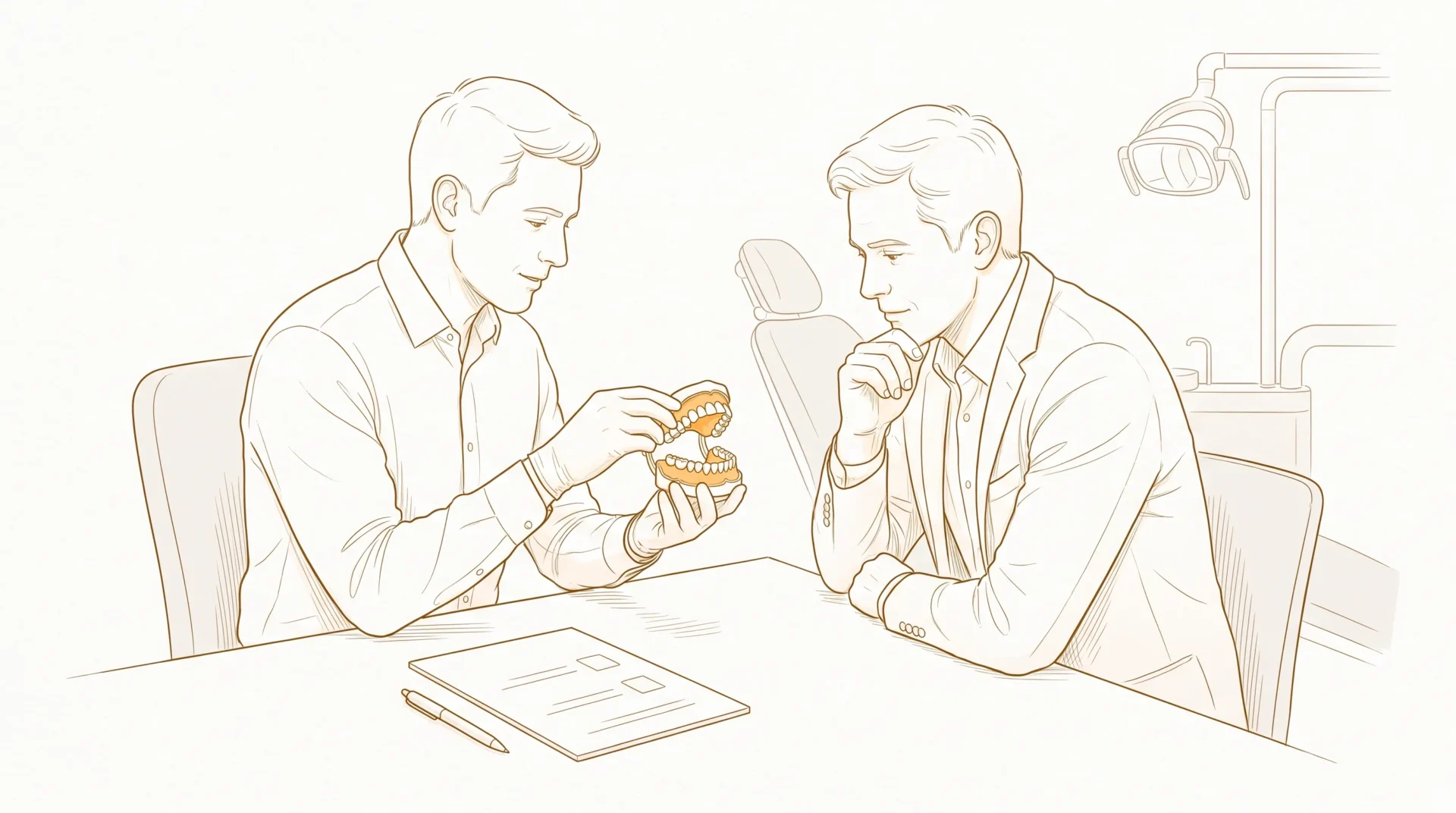
Your dentist may take impressions or digital records of your mouth, assess how your upper and lower teeth meet and check the space available for denture teeth. In some cases, a trial stage is used before the denture is finished, allowing the dentist to assess the position, bite and general appearance.
Good questions include:
- How will you check that the denture fits my gums and bite?
- Will there be a try-in appointment before the final denture is made?
- Can I discuss tooth shape, shade and arrangement?
- What happens if the denture rubs or feels loose after fitting?
- How long does it usually take to adapt to speaking and eating with a new denture?
It is reasonable to expect an adjustment period. A new denture can feel bulky at first. Some people notice changes in speech, increased saliva or sore spots while the mouth adapts. These issues should be reviewed with a dentist rather than ignored, especially if there is persistent pain, ulceration or difficulty eating.
What should I know about costs, appointments and payment options?
Denture costs vary because treatment plans vary. Fees may depend on whether you need a partial or full denture, the materials used, whether teeth need to be removed or treated first and how many appointments are required.
Rather than asking only for a single price, ask for a written estimate that explains what is included. For example, you may want to know whether impressions, try-in visits, fitting, initial adjustments, repairs or future relines are included or charged separately.
At Integrated Dental Care in Pakenham, patients can discuss general dentistry, cosmetic dentistry, emergency dental concerns and missing tooth options in the context of their oral health. Payment plans are available, but suitability and terms should be discussed directly with the clinic before starting treatment.
Useful cost-related questions include:
- Can I have a written treatment plan and estimate before deciding?
- Are any extractions, fillings or gum treatment needed before the denture?
- What is included in the denture fee?
- Are adjustments included after fitting, and for how long?
- What payment options may be available?
- If I have private health insurance, what item numbers can I check with my fund?
What are the possible risks and limitations of dentures?
Dentures can be a suitable option for many people, but they are not the same as natural teeth. A balanced discussion should include what dentures may help with and what they may not fully replace.
Possible limitations and risks include:
- Sore spots, rubbing or ulcers, especially during the early adjustment period
- Looseness or movement while eating or speaking
- Reduced chewing efficiency compared with natural teeth
- Changes in taste, speech or saliva flow for some patients
- Ongoing changes in the gums and jawbone, which may affect fit over time
- Breakage or wear that may require repair or replacement
- The need for daily cleaning and safe storage
- Possible impact on remaining teeth if a partial denture is not cleaned properly
These issues do not mean dentures should be avoided. They do mean you should understand what maintenance may be needed and when to return for review.
You should contact a dentist if a denture causes ongoing pain, breaks, no longer fits well or leaves sores that do not settle. If you have swelling, bleeding that does not stop, fever, difficulty swallowing or severe pain, prompt professional assessment is appropriate.
What follow-up care is provided after the denture is fitted?
Follow-up is an important part of denture care. Even a well-planned denture may need adjustments once you start using it in daily life. Your gums, chewing patterns and comfort can change after the fitting appointment.
Ask your dentist:
- When should I return after the denture is fitted?
- Who should I contact if it rubs or feels unstable?
- How often should the denture and my mouth be checked?
- Will I need a reline if my gums shrink or change shape?
- How should I clean the denture and my remaining teeth?
- What should I avoid doing at home, such as filing or bending the denture myself?
For people living in Pakenham or nearby suburbs, local access can make these follow-up visits easier. Denture adjustment often benefits from timely review, especially during the early stages of wear. If you split your time between Melbourne’s south east and inner Melbourne, the same checklist can also be used when comparing another location, such as a Toorak dental clinic, so you can choose care that suits your routine and follow-up needs.
How can I tell if the communication is a good fit?
A denture decision can involve personal concerns about eating, speaking, appearance, cost and comfort. You should feel able to ask questions without being rushed or pressured into one option.
Good communication may include clear explanations of:
- What has been found during your examination
- Which options may be suitable and why
- What the process may involve
- Likely limitations and maintenance needs
- Fees and possible additional costs
- What may happen if you delay or choose not to proceed
It is also acceptable to ask for time to think about your options. For non-urgent care, you should be able to review your treatment plan, discuss it with family if you wish and seek another opinion if you are unsure.
Online reviews can give a general sense of administration or communication, but they should not be relied on to judge whether a treatment will suit you. Dental care is individual, and treatment outcomes and experiences vary between patients.
Questions to bring to your denture consultation
If you are booking an appointment to discuss dentures, it can help to take a written list. You may also want to bring details of your medical history, medication list, private health insurance information and any old dentures you have worn.
Here is a simple consultation checklist:
| Topic | Questions to ask at your appointment |
|---|---|
| Suitability | Are dentures appropriate for my mouth and health history? |
| Options | What types of dentures or alternatives can be considered? |
| Preparation | Do I need dental treatment before the denture is made? |
| Process | How many visits may be needed and what happens at each one? |
| Comfort | What should I expect while adapting to the denture? |
| Maintenance | How do I clean it, store it and know when it needs review? |
| Costs | Can I have a written estimate and payment information? |
| Follow-up | What support is available if it rubs, loosens or breaks? |
Frequently asked questions
Do I need to see a dentist before getting dentures? Yes. A dental examination helps assess your gums, remaining teeth, bite and oral health before a denture is planned. This can reduce the chance of overlooking issues that may affect comfort, fit or function.
Are dentures suitable for everyone with missing teeth? Not always. Denture suitability depends on factors such as gum health, bone shape, remaining teeth, medical history, expectations and ability to maintain the appliance. Your dentist can explain whether dentures or another option may be appropriate.
How long does it take to get used to new dentures? Adaptation varies. Some people adjust within a shorter period, while others need more time and follow-up appointments. Speech, chewing and comfort can change during the early stages, so review is important if problems persist.
Should I choose dentures or dental implants? This depends on your oral health, bone levels, medical history, budget and treatment goals. Dentures are removable. Implants involve surgery and may support crowns, bridges or some types of dentures. A clinical assessment is needed before comparing these options for your situation.
Can dentures be repaired if they break? Many denture problems can be assessed for repair, but it depends on the type and extent of damage. Avoid using household glue or trying to adjust the denture yourself, as this may damage it further or irritate your mouth.
How often should dentures be checked? Your dentist can recommend a review schedule based on your mouth and appliance. Even if the denture feels comfortable, regular dental checks are useful because your gums, remaining teeth and denture fit can change over time.
Considering dentures in Pakenham?
A denture consultation is an opportunity to understand your options, not a commitment to treatment. A dentist can assess your oral health, explain the potential benefits, risks and alternatives, then provide a treatment plan that reflects your individual needs.
If you live in Pakenham, Officer, Beaconsfield, Nar Nar Goon, Koo Wee Rup or elsewhere in Cardinia Shire, you can contact Integrated Dental Care to arrange an assessment and discuss whether dentures or another missing tooth option may be suitable for you.
Disclaimer
The information provided on this website is for general informational and educational purposes only. It is not intended to replace professional dental advice, diagnosis or treatment. Dental needs and treatment outcomes vary between individuals. Always seek advice from a qualified dental practitioner regarding your specific circumstances before making decisions about your oral health or treatment. A consultation and clinical assessment are required to determine which treatment options may be suitable for you. All dental procedures carry potential risks and benefits, which will be discussed with you before treatment.