
Dentures vs Implants: What’s The Better Teeth Replacement Option?
17 July 2026 | Blog
A missing tooth can affect far more than a photo. It may change how you chew, how clearly you speak, or whether you avoid certain foods. When considering dentures vs implants for missing teeth, the right answer is rarely the same for everyone. It depends on how many teeth are missing, the health of your gums and jawbone, your general health, budget, preferences and the time you can allow for treatment.
Dentures and dental implants can both replace missing teeth. They work in different ways, require different care and involve different treatment pathways. A dental examination is needed to assess which options may be appropriate for you.
Dentures vs implants for missing teeth: the main difference
Dentures are removable appliances that replace some or all missing teeth. A partial denture is designed to fit around remaining natural teeth, while a full denture replaces all teeth in an upper or lower jaw. They sit on the gums and are generally removed for cleaning and while sleeping, unless your dentist advises otherwise.
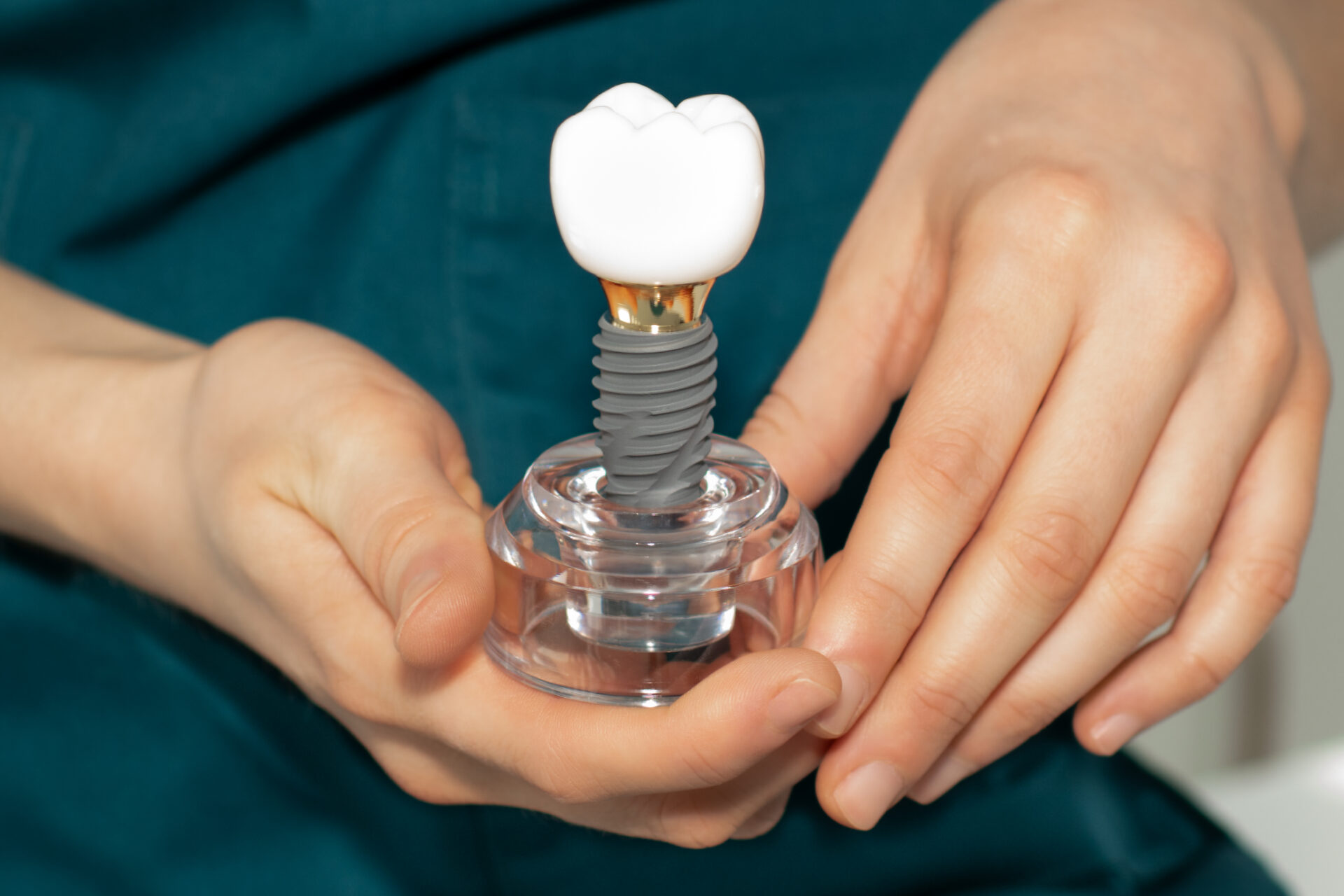
Dental implants are small titanium fixtures placed in the jawbone to act as replacement tooth roots. After healing, an implant can support a crown for one missing tooth, a bridge for several teeth or a fixed or removable full-arch replacement. Some dentures can also be stabilised with implants, creating an option between a conventional denture and a fully fixed restoration.
Neither option is automatically better. The most suitable choice is the one that meets your clinical needs and is manageable in your everyday life.
How dentures may suit you
Dentures are often considered when several teeth are missing, when a person wants a non-surgical replacement option, or when implants are not currently suitable. They can also be made relatively promptly in some situations, including after extractions, although immediate dentures often need adjustment as the gums and bone heal.
A well-made denture can restore the appearance of a smile and provide useful chewing function. Partial dentures may help prevent adjacent teeth from drifting into a gap. Full dentures may support the lips and cheeks after multiple teeth have been lost.
There are practical compromises. Because conventional dentures rest on the gums, they can move slightly during eating or talking. Some people need time to adapt to the feel of an upper denture covering the palate. Dentures may require relines, repairs or replacement over time as the jaw changes shape.
Dentures also do not replace tooth roots. After teeth are lost, the jawbone can gradually shrink. This natural remodelling may affect denture fit, which is why ongoing reviews matter even if a denture initially feels comfortable.
Everyday care for dentures
Dentures should be removed and cleaned daily using a soft denture brush and suitable cleaning product. Regular toothpaste can be too abrasive for some denture materials. They should be handled over a folded towel or basin of water, as they can crack if dropped.
Your gums, tongue and any remaining natural teeth still need daily cleaning. Routine dental checks help assess the fit of the denture, gum health and oral tissues.
How dental implants may suit you
Implants may be considered for a single missing tooth, a row of missing teeth or a full arch. Unlike a conventional bridge, a single implant crown does not usually require the neighbouring teeth to be shaped down for support. Implant-supported teeth are fixed in place in many cases, which some people find more familiar than removable dentures.
For people missing all teeth, implants may stabilise a removable overdenture or support a fixed full-arch restoration. The number of implants, type of restoration and treatment sequence vary considerably. Terms such as All-On-X describe a full-arch approach, but they are not a one-size-fits-all treatment.
Implant treatment involves surgery, healing time and careful planning. A dentist may use X-rays and three-dimensional imaging to evaluate bone volume, bite, gum health and the location of nearby structures. Some patients need additional procedures, such as bone grafting, before implants can be considered. Others may not require them.
Implants are not immune to problems. Plaque can cause inflammation around an implant, and untreated disease may affect the supporting bone. Crowns, bridges and denture attachments can also wear, chip or loosen and may need maintenance. Daily cleaning and regular professional reviews are central to long-term care.
Factors that can affect implant suitability
A history of gum disease, smoking or vaping, poorly controlled diabetes, certain medications, heavy grinding and inadequate bone can affect planning or risk. These factors do not always rule out implants, but they need an individual assessment. Your dentist may also discuss whether medical clearance or a coordinated approach with your GP or specialist is appropriate.
Comparing dentures and implants
| Consideration | Dentures | Dental implants |
|---|---|---|
| How they are held | Rest on the gums, sometimes with clasps | Anchored in the jawbone and connected to a restoration |
| Treatment process | Usually non-surgical | Requires surgical placement and a healing period |
| Daily routine | Remove and clean separately | Clean around the restoration like teeth, with specific aids where needed |
| Feel when eating | May move, particularly with harder foods | Often more stable, depending on the restoration and clinical situation |
| Effect on jawbone | Does not replace the tooth root | May help maintain bone in the implant area, although changes can still occur elsewhere |
| Ongoing needs | Adjustments, relines and eventual replacement may be needed | Monitoring and maintenance of gums, implant and restoration are required |
| Upfront cost | Often lower initially | Usually higher because of surgery, components and planning |
Costs should be discussed after an examination and treatment plan. The total can differ based on the number of teeth being replaced, imaging, extractions, grafting, materials, sedation requirements and the type of final restoration. Private health cover and payment options may also affect out-of-pocket costs, but eligibility and benefits vary.
What about an implant-supported denture?
For some people, an implant-supported denture offers a practical middle ground. The denture remains removable for cleaning, but it connects to implants using clips, bars or other attachments. This can improve stability compared with a conventional full denture.
It is still a removable appliance, and its attachments require cleaning and periodic servicing. Whether it is suitable depends on available bone, oral health, the opposing teeth, hand dexterity and personal preference. It may be worth discussing if you find a lower denture particularly loose or difficult to manage.
Questions to discuss at your appointment
Before choosing a replacement option, it can help to ask how each treatment would affect your eating, speech, cleaning routine and future maintenance. Ask whether any existing teeth can be retained, whether gum treatment is needed first and what will happen if the jawbone changes over time.
It is also reasonable to ask for a staged treatment plan. In some cases, restoring urgent problems first and considering longer-term options later is clinically sensible. A clear written plan should explain the proposed treatment, alternatives, likely limitations, expected maintenance and fees.
Frequently asked questions
Are implants more comfortable than dentures?
Many people find fixed implant-supported teeth feel more stable because they do not rest directly on the gums. However, comfort is individual. A properly fitted denture can work well, while an implant restoration can still feel unfamiliar initially and needs careful cleaning. The design, fit and your oral tissues all matter.
Can I have implants if I have worn dentures for years?
Possibly. Long-term denture wear can be associated with bone changes, but this does not automatically exclude implant treatment. An examination and imaging can show whether implants may be possible and whether additional procedures need to be considered.
Is a bridge another option for a missing tooth?
Yes. A fixed dental bridge may replace a missing tooth by attaching to neighbouring teeth, or in some cases to implants. It can be a suitable option when the supporting teeth already need crowns, or when implant treatment is not preferred or appropriate.
How long do dentures and implants last?
Both need ongoing care. Dentures may need adjustment or replacement as the mouth changes, while implant restorations and their components can require repair or replacement over time. Regular check-ups allow issues to be identified early, but no dental treatment can be guaranteed to last for a particular period.
Choosing a tooth replacement is not a decision to rush. A consultation at Integrated Dental Care can help you understand the condition of your teeth, gums and jawbone, then weigh dentures, implants and other options in a way that fits your health, priorities and daily routine.
Disclaimer
The information provided on this website is for general informational and educational purposes only. It is not intended to replace professional dental advice, diagnosis or treatment. Dental needs and treatment outcomes vary between individuals. Always seek advice from a qualified dental practitioner regarding your specific circumstances before making decisions about your oral health or treatment. A consultation and clinical assessment are required to determine which treatment options may be suitable for you. All dental procedures carry potential risks and benefits, which will be discussed with you before treatment.