
How to Whiten Teeth Safely at Home or Dentist
17 July 2026 | Blog
A whitening toothpaste may lift some surface staining, but it cannot reliably change the natural shade of your teeth. That distinction matters when deciding how to whiten teeth safely. The safest option depends on why your teeth look darker, the condition of your teeth and gums, and whether you have existing dental work.
For many people, a check-up and professional clean are sensible first steps. Staining from coffee, tea, red wine, tobacco or some foods can often be reduced by removing plaque, calculus and surface deposits. If the underlying tooth colour is naturally darker or has changed over time, whitening may be considered after a dentist has checked that it is appropriate for you.
Why teeth change colour
Teeth can appear yellow, brown or grey for several reasons. Everyday pigments can collect on the tooth surface, particularly where plaque is present. Ageing can also make teeth appear darker as enamel gradually becomes thinner and more of the naturally yellow dentine beneath shows through.
Some colour changes begin inside the tooth. Past trauma, decay, certain medicines, developmental conditions and an old root canal treatment can alter the colour of one or more teeth. These causes need a dental assessment, as standard whitening may not address them and, occasionally, treatment for the tooth itself may be needed.
Whitening is cosmetic rather than a treatment for decay, gum disease or tooth pain. If you have bleeding gums, sensitivity, a broken tooth, swelling or persistent pain, arrange a dental appointment before using whitening products.
How to whiten teeth safely: start with an assessment
A dentist can assess your oral health, identify the likely source of staining and discuss realistic options. This is particularly useful if you have had fillings, crowns, veneers, bridges, implants, dentures or orthodontic treatment.
Whitening products change the shade of natural tooth structure only. They do not whiten porcelain, composite resin or other restorative materials. As a result, a crown or filling may look different from the surrounding teeth after whitening. In some cases, dentists plan whitening before replacing visible restorations, but this depends on your individual needs and budget.
An assessment also helps identify factors that may make whitening unsuitable or require extra care, such as untreated decay, leaking restorations, gum recession or significant sensitivity. Pregnant or breastfeeding people should discuss elective whitening with their dentist or other treating health professional before proceeding.
Options for whitening teeth
Dentist-supervised whitening
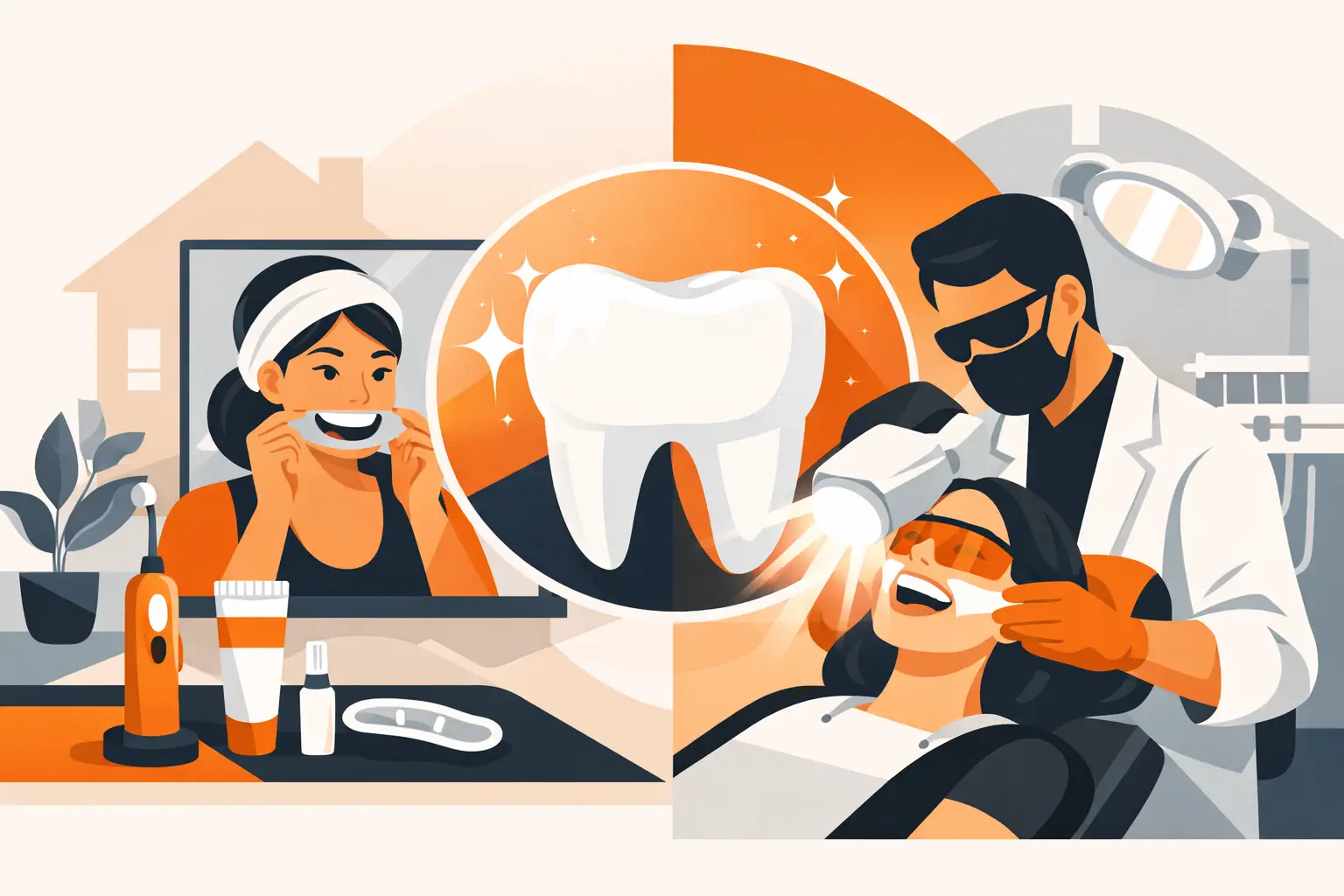
Dentist-supervised whitening may involve custom-made trays used at home with a prescribed whitening gel, or treatment performed in the dental clinic. The right approach varies according to your teeth, sensitivity history, desired shade and schedule.
Custom trays are made to fit your teeth, helping keep the whitening gel in contact with tooth surfaces and reducing unnecessary contact with the gums. A dentist can explain how much gel to use, how long to wear the trays and what to do if sensitivity develops.
In-clinic whitening at our Pakenham dental clinic can be suitable for some patients who prefer an appointment-based approach. It is not automatically better for every person, and the final shade can vary. Some people may need more than one session or a course of take-home treatment to work towards their preferred result.
Over-the-counter whitening products
Whitening toothpastes, strips, gels and rinses are widely available. Their active ingredients, strength and instructions differ, so read the label carefully and use only as directed. Products bought from reputable Australian retailers should be used with realistic expectations: some mainly remove surface stains, while others may provide a more noticeable change over time.
Over-the-counter products can be less suitable if you have gum recession, exposed root surfaces, cavities, cracks, worn enamel or existing sensitivity. If a product causes ongoing discomfort or gum irritation, stop using it and seek dental advice.
Whitening toothpaste and professional cleaning
A whitening toothpaste may help manage new surface stains between dental visits. However, some are more abrasive than regular toothpaste, so using them excessively may not suit everyone, particularly people with sensitivity or enamel wear. A fluoride toothpaste remains important for helping protect against decay.
A professional clean does not bleach teeth, but it can remove external staining and give a clearer picture of your natural tooth colour. For some people, this is all they need.
Avoid DIY whitening shortcuts
It can be tempting to try household ingredients promoted online, especially when a quick result is promised. These methods can be unpredictable and may cause harm.
Avoid using the following on your teeth:
- lemon juice, vinegar or other acids, which can soften and erode enamel
- charcoal powders, salt or abrasive scrubs, which may wear tooth surfaces and irritate gums
- undiluted hydrogen peroxide or products not intended for oral use
- whitening products from unverified sellers, particularly where the ingredients or directions are unclear.
Enamel does not grow back once it has been lost. Whitening should not involve scraping, sanding or repeatedly exposing teeth to acidic substances. If an approach sounds harsh, painful or too good to be true, it is best avoided.
Reduce sensitivity while whitening
Temporary sensitivity can occur during or after whitening because the active ingredient can pass through enamel and dentine to the inner part of the tooth. It is usually manageable, but it should not be ignored.
Use the amount and wear time advised by your dentist or stated on the product. More gel or longer wear does not necessarily mean a better outcome, and it can increase irritation. If you use trays, wipe away excess gel that reaches the gums.
A toothpaste formulated for sensitive teeth may be helpful before and during whitening. Some people benefit from spacing out applications, shortening wear time or taking a break for a few days. Your dentist can provide tailored advice, particularly if sensitivity is persistent or severe.
Stop whitening and arrange an assessment if you experience sharp pain, prolonged sensitivity, sore or white patches on the gums, swelling, or a change in the colour of a single tooth. These symptoms may have causes unrelated to whitening.
Keep expectations realistic
Teeth naturally vary in shade, and a healthy smile is not necessarily bright white. Whitening can lighten natural teeth, but the amount of change, how evenly teeth respond and how long the result lasts differ from person to person.
Diet, smoking or vaping, oral hygiene and the original tooth shade can all influence how quickly staining returns. Regular brushing with fluoride toothpaste, cleaning between teeth, drinking water after strongly coloured drinks and attending routine dental examinations and cleans can help manage surface stains. There is no need to avoid favourite foods completely, but moderation can make a difference.
If you have a wedding, photographs or another event coming up, allow time for a dental assessment and any recommended treatment. Rushing whitening can increase the chance of sensitivity and does not guarantee a particular shade by a particular date.
Frequently asked questions
Is teeth whitening safe?
Teeth whitening can be safe when it is suitable for your oral health and products are used as directed. Dentist supervision adds the benefit of an oral health assessment and individual guidance. Safety may be reduced when products are misused, worn for too long or applied to teeth with untreated problems.
Can I whiten crowns, veneers or fillings?
No. Whitening agents do not change the colour of crowns, veneers, fillings, bridges or dentures. A dentist can discuss whether whitening natural teeth first, or replacing a visible restoration later, may be appropriate.
How long does teeth whitening last?
Results vary. Surface staining can gradually return, especially with regular exposure to tea, coffee, red wine, tobacco or other pigments. Some people choose occasional maintenance treatment under dental guidance, while others are happy with the shade for longer.
A whiter smile should never come at the expense of healthy enamel and gums. If you are considering whitening in Pakenham, a dental examination can help you choose a measured approach that suits your teeth, existing dental work and expectations. Contact [Integrated Dental Care] (https://integrateddental.com.au/) today to arrange a consultation with our Pakenham dentists.
Disclaimer
The information provided on this website is for general informational and educational purposes only. It is not intended to replace professional dental advice, diagnosis or treatment. Dental needs and treatment outcomes vary between individuals. Always seek advice from a qualified dental practitioner regarding your specific circumstances before making decisions about your oral health or treatment. A consultation and clinical assessment are required to determine which treatment options may be suitable for you. All dental procedures carry potential risks and benefits, which will be discussed with you before treatment.