

What to Expect From a Dental Clinic in Australia
4 September 2026 | Dental Fees & Financing, General Dentistry, Preventative Dentistry
If you are searching for an Australia dental clinic, you may be trying to understand what happens when you book, how treatment choices are explained, what costs might look like and how dental care is regulated here. In Australia, dental care may include preventive check-ups and cleans, urgent appointments, fillings, children’s dentistry, cosmetic options, orthodontic assessments and more complex treatments such as implants, depending on your needs and the clinic’s services.
The main thing to expect is this: a dental clinic should assess your oral health, explain findings in clear language, discuss suitable options and outline costs, risks and alternatives before you agree to treatment. You should feel able to ask questions and take time to consider non-urgent care.
For patients in Pakenham, Officer, Beaconsfield, Nar Nar Goon, Koo Wee Rup and surrounding parts of Cardinia Shire, choosing a local clinic can also make routine reviews, follow-up appointments and urgent care easier to manage.
What an Australia dental clinic usually provides
Most dental clinics in Australia focus on preventive and general dental care first. This may include examinations, X-rays when clinically needed, scale and cleans, fluoride applications, fillings, gum health checks and advice about brushing, flossing and diet.
Some clinics also provide additional services such as cosmetic dental treatment, teeth whitening, clear aligner consultations, dental implants, crowns, bridges, dentures or emergency appointments. Not every treatment is suitable for every person, and some care may require referral to a dental specialist or another health professional.
If you are comparing options, it may help to understand the broader system first. Integrated Dental Care has a separate guide to dental care options in Australia that explains how public, private, preventive, emergency, restorative, cosmetic and orthodontic care may fit together.
| Area of care | What it may involve | What to ask before proceeding |
|---|---|---|
| Preventive dentistry | Check-ups, cleans, fluoride, oral hygiene advice and monitoring | How often should I return based on my oral health? |
| Restorative dentistry | Fillings, crowns, bridges, dentures or repair of damaged teeth | What are the benefits, risks, alternatives and likely maintenance needs? |
| Cosmetic dentistry | Whitening, veneers, bonding or other appearance-focused options | Is my mouth healthy enough for this option and what are the limitations? |
| Orthodontic care | Braces or clear aligner assessment, such as Invisalign where suitable | What records are needed and how long may treatment take? |
| Emergency dentistry | Assessment of pain, swelling, trauma, broken teeth or lost restorations | Do I need same-day care or can this wait for a planned appointment? |
Before your first appointment
Your first contact with a clinic may be by phone or online booking. If you are booking a routine visit, you can usually choose a general appointment type and add a short note about your main concern. If you have swelling, trauma, severe pain, a knocked-out adult tooth or bleeding that will not settle, it is better to call so the team can help decide the most appropriate appointment pathway.
Before the visit, you may be asked to provide your medical history, medication list, allergies, pregnancy status if relevant and any private health insurance details. This information matters because oral health care can be affected by conditions such as diabetes, heart conditions, immune system issues and medications that affect bleeding, saliva or bone healing.
If you have recent dental X-rays or records from another clinic, ask whether they should be transferred. This can sometimes reduce unnecessary repeat imaging, although your dentist will decide what records are clinically needed after assessing you.
What happens during a dental examination
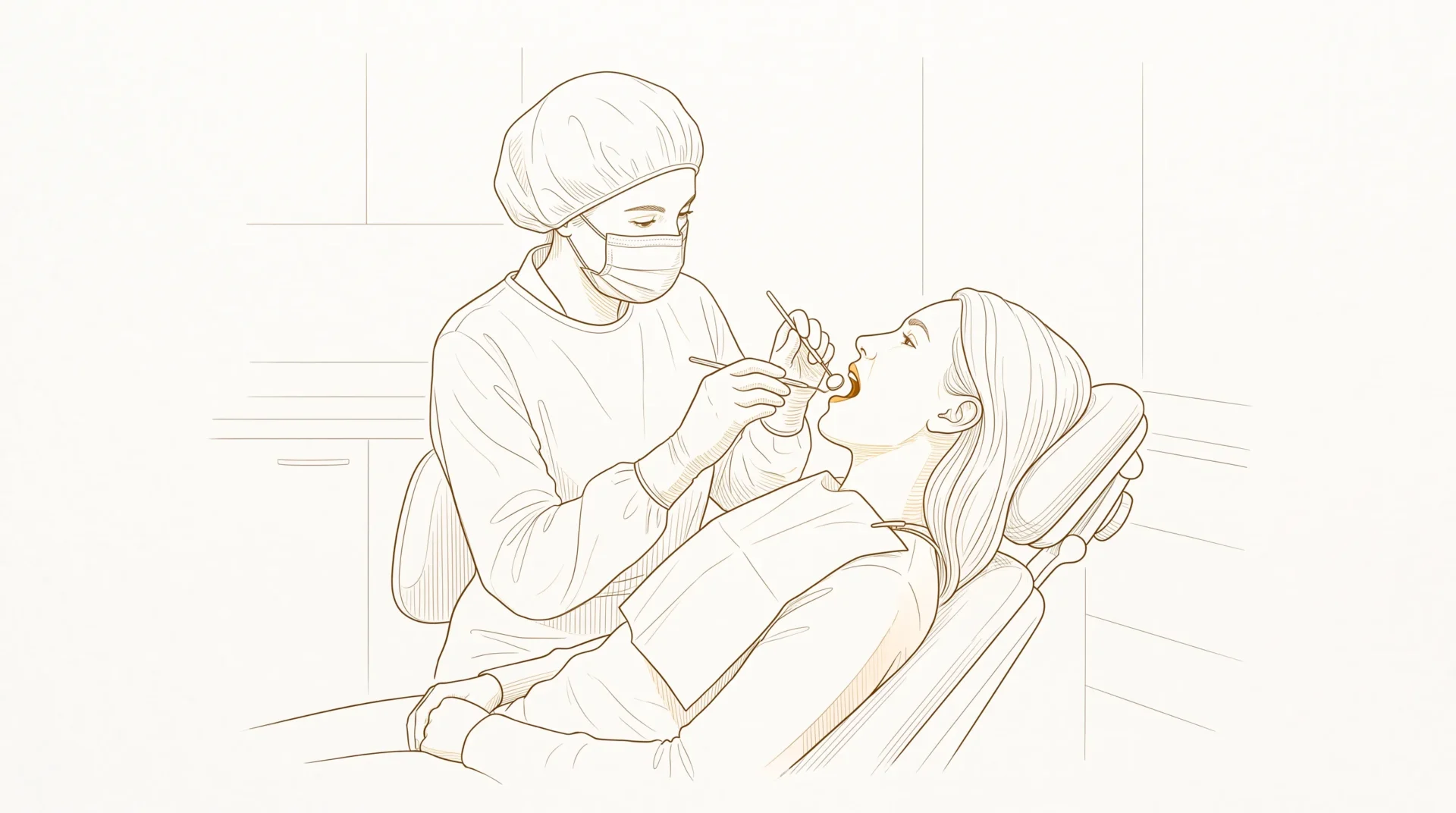
A dental examination is more than a quick look at the teeth. Your dentist will usually ask about your concerns, symptoms, dental history and any goals you have for treatment. They may check your teeth, gums, bite, jaw joints, soft tissues, existing fillings or crowns and signs of wear or erosion.
X-rays may be recommended if the dentist needs to check areas that cannot be seen directly, such as between teeth, under fillings or around tooth roots. They are not automatically required at every visit. The decision should be based on clinical need, your dental history and the issue being investigated.
A scale and clean may be completed at the same appointment if suitable. In other cases, gum treatment, fillings or other procedures may need a separate appointment after the dentist has explained the findings and options.
If you would like more detail on a standard check-up, this guide to what happens during a routine dental appointment explains the process in a patient-friendly way.
Registration, safety and patient rights in Australia
Dental practitioners in Australia must be registered to practise. Patients can check a practitioner’s registration using the Ahpra public register. This is one practical way to confirm that the person providing care is registered in Australia.
Dental clinics are also expected to follow professional standards around infection prevention, informed consent, record keeping, privacy and safe clinical practice. During a visit, you can expect instruments to be processed appropriately, clinical areas to be cleaned between patients and staff to use protective equipment when providing treatment.
Informed consent is an important part of dental care. Before treatment, your dentist should explain what they have found, what treatment may involve, expected limitations, possible risks, reasonable alternatives and what may happen if you decide not to proceed. For non-urgent treatment, it is reasonable to ask for time to consider your options.
Costs, quotes and payment discussions
Dental treatment costs in Australia vary because they depend on the type of care, the complexity of the problem, the materials used, diagnostic records, laboratory involvement, appointment time and whether follow-up visits are needed. A simple check-up is very different from a crown, clear aligner treatment or implant planning, so it is difficult to compare fees without knowing what is included.
Before planned treatment, a clinic should be able to provide an itemised estimate or treatment plan. This may include dental item numbers, which can help you check possible private health insurance benefits with your fund. It is also reasonable to ask whether a quoted fee includes X-rays, scans, temporary restorations, review appointments or laboratory work, as inclusions can vary between treatments.
If you are weighing up treatment fees, Integrated Dental Care’s article on what affects dental treatment costs in Australia explains why prices can differ between procedures and providers.
Some clinics offer payment plan options. These should be explained clearly before you apply, including the total amount payable, repayment terms, eligibility checks and what happens if treatment changes. A payment plan does not make treatment suitable by itself. Clinical suitability should still be assessed first.
For eligible children, the Australian Government’s Child Dental Benefits Schedule may help cover certain basic dental services. Eligibility, limits and covered services are explained by Services Australia. If a clinic offers bulk-billed children’s dental treatment under the scheme, confirm eligibility and what is covered before the appointment.
Common treatment options you may hear about
A dental clinic may discuss a range of options depending on your oral health, symptoms and preferences. Preventive care is often the starting point because it aims to reduce the risk of problems progressing and helps monitor changes over time.
Restorative treatment may be considered when a tooth is decayed, cracked, worn or missing. Options can include fillings, crowns, bridges, dentures or implants. Each option has its own advantages, limitations, maintenance needs and risks. For example, dental implants require enough suitable bone and healthy surrounding tissues, and they involve surgical planning. They are not suitable for everyone.
Cosmetic treatment focuses on the appearance of teeth, but it should still begin with an oral health assessment. Whitening, veneers, bonding and orthodontic treatment can all have limitations. Whitening may not change the colour of fillings or crowns, veneers may involve preparation of tooth structure and aligners require patient cooperation and ongoing retention after treatment.
Integrated Dental Care in Pakenham offers general, cosmetic and emergency dentistry, with services that include dental implants, Invisalign treatment, teeth whitening and children’s dentistry. Suitability for any treatment depends on an individual assessment, including your oral health, medical history, anatomy and goals.
Private and public dental care in Australia
Australia has both public and private dental services. Private clinics are commonly used for routine check-ups, preventive care, cosmetic dentistry, orthodontic options and treatment where patients want more choice around timing or provider. Fees are usually paid by the patient, with possible rebates from private health insurance depending on the policy.
Public dental services are generally targeted to eligible patients and may involve waiting lists for non-urgent care. Eligibility and access vary between states and territories. In Victoria, public dental information is available through state health and community dental pathways, and patients can also speak with a local clinic or government service if they are unsure where to start.
Neither public nor private care is automatically the right fit for every situation. The most appropriate pathway depends on urgency, eligibility, treatment needs, cost considerations and personal circumstances.
When to seek dental care sooner
Not every dental concern is an emergency, but some symptoms should be assessed promptly. Contact a dental clinic or appropriate health service if you have facial swelling, dental trauma, a knocked-out adult tooth, severe dental pain, signs of infection, uncontrolled bleeding after a dental procedure or difficulty opening your mouth.
If symptoms are severe, involve breathing or swallowing difficulty, or are linked with significant facial swelling or fever, urgent medical care may be needed. Healthdirect provides general Australian guidance on dental care and when to seek help, and emergency services should be used for serious or life-threatening symptoms.
For less urgent issues such as a chipped tooth without pain, sensitivity, bleeding gums, a loose filling or jaw discomfort, a planned dental appointment can still be useful. Early assessment may help clarify the cause and the options, but it should not be presented as a guarantee that more extensive treatment will be avoided.
How to choose a clinic with confidence
When choosing a dental clinic in Pakenham or Melbourne’s south east, practical details matter. Consider whether the clinic explains treatment clearly, provides written estimates for planned care, discusses alternatives, offers appointment times you can realistically attend and has processes for urgent concerns.
It can also be helpful to ask whether the clinic sees children, provides preventive care, discusses cosmetic options only after checking oral health and explains when referral may be appropriate. A clinic does not need to provide every possible service, but it should be clear about what it can assess and when another provider may be needed.
For a local perspective, Integrated Dental Care has a guide on choosing a dental clinic in Pakenham that covers registration, communication, services, costs and emergency access.
Frequently Asked Questions
Do I need X-rays at every dental visit? Not necessarily. X-rays should be recommended based on clinical need, symptoms, risk factors and what your dentist needs to assess. Your dentist can explain why an X-ray is or is not needed.
Can treatment be done at the first appointment? Sometimes simple or urgent care may be provided on the same day if it is clinically appropriate and you consent. More complex treatment usually requires examination, records, planning and a separate appointment.
Are dental clinics in Australia regulated? Yes. Dental practitioners must be registered to practise in Australia, and patients can check registration through Ahpra. Clinics are also expected to follow professional standards for consent, infection control, privacy and clinical care.
Do private dental clinics bulk bill? Bulk billing is not generally available for adult private dental care. Some clinics may offer bulk-billed treatment for eligible children under the Child Dental Benefits Schedule, but eligibility and covered services should be confirmed before treatment.
How often should I see a dentist? The right interval varies. Some people may be advised to attend every six months, while others may need more or less frequent visits depending on decay risk, gum health, medical history and previous dental treatment.
Need a dental appointment in Pakenham?
A dental examination can help determine the cause of symptoms, identify suitable options and explain the potential benefits, risks and alternatives. If you are in Pakenham or nearby areas of Melbourne’s south east, you can contact Integrated Dental Care to arrange an assessment and discuss what type of appointment may be appropriate for your concerns.
Disclaimer
The information provided on this website is for general informational and educational purposes only. It is not intended to replace professional dental advice, diagnosis or treatment. Dental needs and treatment outcomes vary between individuals. Always seek advice from a qualified dental practitioner regarding your specific circumstances before making decisions about your oral health or treatment. A consultation and clinical assessment are required to determine which treatment options may be suitable for you. All dental procedures carry potential risks and benefits, which will be discussed with you before treatment.