

How to Choose the Family Dental Clinic for Your Household
7 October 2026 | Children's Dentistry, General Dentistry, Preventative Dentistry
How to Choose the Family Dental Clinic for Your Household
Choosing the family dental clinic for your household means finding care that suits each person’s needs, not simply booking everyone at the same address. Look for clear communication, appropriate care for different ages, transparent fees and appointment arrangements that work with your daily routine.
One practice may suit your whole family, but some members may need a different dentist or a specialist referral. For households in Pakenham and the surrounding Cardinia Shire, a useful starting point is to compare how a clinic handles those individual needs before committing to ongoing care.
Start with your household’s actual needs
Think about who needs care now and what might make attending difficult. A young child’s first visit, a teenager’s concerns about privacy and an older adult’s mobility needs require different conversations.
You do not need to predict future treatments. Instead, identify the practical and communication needs that a clinic should be able to discuss with you.
| Household need | A useful question to ask |
|---|---|
| A child attending for the first time | How do you introduce children to an examination? |
| Someone who feels anxious about dentistry | Can we discuss their concerns before the appointment? |
| An older adult with mobility limitations | What access arrangements are available? |
| Several people needing appointments | Can visits be coordinated without shortening individual appointments? |
| A person taking regular medicines | What medical information should they bring? |
| A family member with complex dental needs | How are referrals and care between providers managed? |
The aim is to identify the family dental clinic that can respond to your household’s circumstances, rather than choosing the longest service list.
Needs also change over time. Our guide to family dental care at different stages of life explains those age-related considerations in more detail.
Questions to ask the family dental clinic before booking
A short phone conversation can clarify things that an online booking form may not cover. Explain who the appointment is for, whether they have symptoms and any communication or access requirements.
Useful questions include:
- Appointment suitability: Which appointment type should we select, and is there enough time to discuss our concerns?
- Continuity: Can we usually request the same dentist, and what happens when that dentist is unavailable?
- Communication: Can a support person attend, and how can interpreter or other communication needs be accommodated?
- Costs: What does the quoted fee include, and what could be charged separately?
- Unexpected problems: How should we contact the practice if symptoms develop between visits or outside opening hours?
Listen for clear answers rather than promises. A clinic may need to check appointment availability or ask a dentist about a particular concern. That is more useful than assuming every request can be accommodated.
Before choosing, you can check a practitioner’s registration through the Ahpra register of practitioners. “Family dentist” describes a style of practice, not a separate dental specialist registration category.
Ask how the family dental clinic manages continuity when your usual dentist is away, including access to relevant records and how another clinician is briefed. This matters particularly when someone is midway through a course of treatment.
Look for communication that respects each person
Good communication should leave you understanding what the dentist found, what options are available and why a recommendation has been made. You should be able to ask questions without feeling rushed into a decision.
For children, ask how the team explains unfamiliar equipment and responds when a child needs a pause. For adults who feel anxious, discuss previous difficulties and any preferences before the examination. Do not assume a particular anxiety-management option is available or suitable without asking.
Family care also involves privacy. Adult relatives need to consent to sharing their information. For teenagers, involvement in decisions and confidentiality depend on their capacity to understand, the circumstances and applicable requirements. Ask how the practice manages these conversations.
A shared practice does not mean a shared treatment plan. Each family member should receive recommendations based on their own examination, medical history and preferences.
When assessing the family dental clinic, notice whether explanations include reasonable alternatives, the option of monitoring where appropriate and the likely consequences of delaying recommended care. A service being available does not mean everyone needs it.
Check whether appointments fit everyday family life
For families travelling from Officer, Beaconsfield or elsewhere in Melbourne’s south east, practical access can influence whether ongoing attendance is manageable. Consider travel time during school and work hours, rather than distance alone.
Ask about actual opening hours, appointment availability, parking and physical access. Do not assume there is step-free entry, space for a pram or suitable facilities simply because a practice describes itself as family-friendly.
Coordinating appointments may reduce travel, but separate visits can sometimes work better. A parent may find it easier to discuss their own care when they are not also supervising a young child. Someone who needs a longer discussion should not have to squeeze it into another relative’s appointment.
Transport planning matters if a treating clinician advises someone not to drive or requires an adult escort. For a relative receiving care overseas, Stuur Chauffeurs’ private chauffeur services in the Netherlands are one transport option to investigate. For appointments in Pakenham, arrange local transport and confirm any escort requirements; a booked driver does not necessarily meet them.
Choose the family dental clinic whose appointment arrangements are workable for your household, while allowing enough time for each person’s care.
Understand fees before agreeing to treatment
Compare what an appointment includes, not just its advertised starting price. An examination, cleaning and X-rays may be quoted together or separately. X-rays should be recommended according to clinical need, rather than automatically taken because several family members are attending.
Ask for an explanation of proposed treatment costs before proceeding. For a course of care, a written estimate can help you understand which appointments and procedures are included. Ask what could change the estimate and how additional costs would be discussed.
Private health insurance benefits depend on your policy, limits and the treatment provided. A payment plan changes how you pay, not whether a procedure is appropriate. Check repayment terms, eligibility, fees and any conditions attached to an interest-free offer.
Check children’s benefits and other payment options
The Australian Government’s Child Dental Benefits Schedule can help eligible children access specified basic dental services. Eligibility, available benefits and treatment coverage need to be checked; not every child or procedure qualifies.
Integrated Dental Care offers bulk-billed kids dental options and interest-free payment plans. Ask the team to confirm eligibility, applicable terms and whether the proposed services are covered before treatment starts. Our overview of dental care options in Australia explains the broader differences between private care, public services and funding options.
When comparing the family dental clinic with another practice, use equivalent appointment inclusions and treatment estimates. A lower initial fee alone does not tell you what your household’s care will cost.
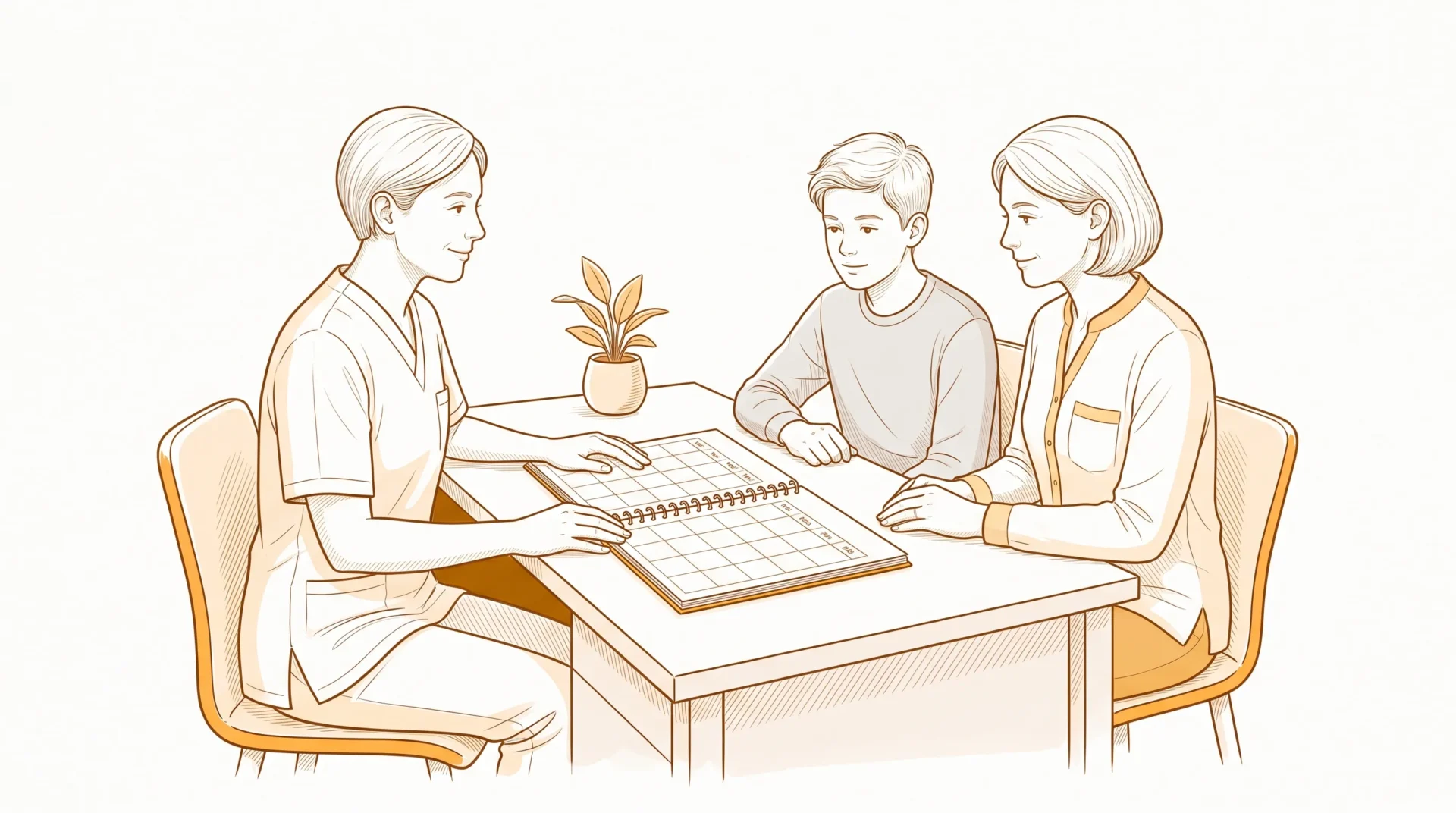
Use the first appointment to assess the fit
A first visit is an opportunity to understand both your oral health and how the practice communicates. It does not oblige you to accept every treatment discussed.
Bring relevant medical information, a medication list and any concerns you want to raise. If you are changing practices, ask how previous dental records can be requested with consent. Existing records may help the dentist understand earlier treatment, although updated examinations or imaging may still be needed.
The dentist will generally discuss your history and examine your teeth, gums and mouth. Additional tests or X-rays may be recommended when clinically indicated. The appointment’s scope depends on the reason for attending, so a visit for toothache may differ from a routine examination.
Before agreeing to treatment, you should understand its purpose, expected benefits, material risks, alternatives and costs. All dental procedures carry potential risks, and suitability and outcomes vary between patients.
Afterwards, consider whether the family dental clinic gave you enough information to make a decision. You do not need to decide immediately about non-urgent treatment, and you can ask for clarification or another opinion if something remains unclear.
Ask how the practice handles changing needs
Continuity is useful, but it should not prevent appropriate referral. Ask what happens if someone needs care beyond the treating dentist’s scope, such as assessment by a registered dental specialist.
A referral is not necessarily a reason to change the whole family’s practice. Routine care and specialist treatment can sometimes be coordinated between providers, with relevant information shared with consent.
Check the process for unexpected symptoms too. Appointment availability varies, so an emergency service listing should not be taken as a guarantee of immediate treatment. Significant tooth pain, a broken tooth or swelling warrants prompt dental advice.
Difficulty breathing or swallowing, or rapidly increasing swelling involving the face or neck, requires urgent medical attention. Call 000 for a medical emergency rather than waiting for a routine dental appointment.
Knowing how the family dental clinic handles referrals and urgent concerns helps you plan without assuming every situation can be managed in the same place.
Frequently asked questions
Does everyone in the family need to see the same dentist? No. Using one practice may simplify bookings and records, but different family members can see different dentists. Individual needs, preferences and any specialist referrals should guide the arrangement.
How often should family members have a check-up? The interval should be based on each person’s oral health and risk factors. Children and adults in the same household may receive different recommendations. Ask your dentist why a particular review interval is appropriate.
Can we book everyone together? Ask the practice about coordinated appointments and how much time each person needs. Availability, the reason for each visit and supervision needs may mean separate bookings are more practical.
What if a family member is nervous or has not attended for years? Tell the practice when booking. Explain any previous difficulties and ask how concerns can be discussed before treatment. The first priority is an assessment and a manageable plan, not agreeing to extensive care in advance.
Can one practice provide both general and cosmetic dentistry? Some can, including Integrated Dental Care. Cosmetic treatment is optional and requires an individual assessment. Ask about potential benefits, limitations, risks and alternatives, including choosing not to proceed.
Discuss your household’s needs in Pakenham
Integrated Dental Care provides general, children’s, cosmetic and emergency dental services in Pakenham, with online booking available. If you are considering the family dental clinic for your household, explain who needs care and any practical concerns before arranging appointments.
You can use our guide to choosing the right online dental appointment to understand booking categories. Contact the team if you are unsure which visit is appropriate or need to confirm access, fees or appointment arrangements.
Disclaimer
The information provided on this website is for general informational and educational purposes only. It is not intended to replace professional dental advice, diagnosis or treatment. Dental needs and treatment outcomes vary between individuals. Always seek advice from a qualified dental practitioner regarding your specific circumstances before making decisions about your oral health or treatment. A consultation and clinical assessment are required to determine which treatment options may be suitable for you. All dental procedures carry potential risks and benefits, which will be discussed with you before treatment.