
What Dental Professionals Check During an Oral Health Exam
16 September 2026 | Blog, General Dentistry, Preventative Dentistry
An oral health exam is not just a quick look for cavities. During this appointment, dental professionals check your teeth, gums, soft tissues, bite, jaw function and any changes that may affect your oral health. The aim is to understand what is happening now, identify concerns early where possible and explain suitable options based on your individual needs.
If you live in Pakenham, Officer, Beaconsfield, Nar Nar Goon, Koo Wee Rup or nearby areas of Melbourne’s south east, knowing what happens during an exam can make the appointment feel more straightforward. It can also help you ask better questions and understand why your dentist may recommend X-rays, cleaning, monitoring or further treatment.
What dental professionals check first: your health history and concerns
Before examining your mouth, your dental team will usually ask about your general health. This may include medical conditions, allergies, pregnancy, previous dental treatment, smoking or vaping, medications and supplements. Some medicines can affect saliva flow, healing or bleeding, so this information helps your dentist plan care more safely.
You may also be asked about symptoms such as toothache, sensitivity, bleeding gums, jaw clicking, headaches, broken fillings or changes in your mouth. Even a small detail, such as discomfort when chewing on one side, can help guide the examination.
This is why dental professionals usually begin with a conversation rather than moving straight to instruments. Your oral health is connected to your wider health, habits and risk factors. For example, someone with a dry mouth, a high-sugar snacking pattern or a history of gum disease may need a different prevention plan from someone with few risk factors.
If you are unsure what kind of appointment you need, Integrated Dental Care has a helpful guide on when to book a check-up or consultation in Pakenham.
Teeth, fillings and signs of tooth decay
A key part of an oral health exam is checking each tooth surface. Your dentist looks for early decay, cavities, cracks, enamel wear, broken edges, leaking fillings and other changes that may not be obvious at home. They may use a small mirror, good lighting and a dental probe to gently assess tooth surfaces and restoration margins.
Tooth decay does not always cause pain in the early stages. A tooth can look fairly normal to you in the mirror, yet have changes between the teeth or around an old filling. When appropriate, X-rays may be suggested to check areas that are difficult to see directly.
Dental professionals also look at existing dental work, such as crowns, bridges, fillings, implants or orthodontic retainers. The goal is not only to find problems, but also to check whether previous treatment is still functioning as intended. If something is wearing, chipping or collecting plaque, your dentist may recommend monitoring, repair or replacement depending on the situation.
Common tooth-related checks include:
- Tooth decay on chewing surfaces, between teeth and near the gumline
- Cracks, chips, tooth wear and erosion
- The condition of fillings, crowns, bridges or veneers
- Sensitivity triggers and possible causes
- Food traps or areas that are difficult to clean
Gum health, plaque and bone support
Your gums are examined because healthy gums help support your teeth. Your dentist may look for redness, swelling, recession, bleeding and areas where plaque or calculus, often called tartar, has built up. Calculus is hardened plaque that usually needs professional removal.
In many exams, the dentist or oral health therapist may measure the small spaces between your teeth and gums. This is called periodontal probing. It helps assess whether the gums are healthy or whether there may be signs of gum disease. Gum disease can range from gingivitis, which involves gum inflammation, to periodontitis, which can affect the supporting bone around teeth.
When dental professionals check gum health, they are also thinking about your risk over time. Bleeding gums, loose teeth, gum recession, diabetes, smoking and a family history of gum disease may all be relevant. Your dentist can explain what they find and whether a clean, home care changes, further gum assessment or referral may be appropriate.
The Australian Government’s Healthdirect information on dental care notes that regular dental checks can help identify oral health problems. For practical daily habits, you may also find Integrated Dental Care’s article on the benefits of good oral hygiene useful.
| Area checked | What your dentist is looking for | Why it matters |
|---|---|---|
| Teeth | Decay, cracks, wear and damaged restorations | These changes can affect comfort, chewing and treatment needs |
| Gums | Bleeding, swelling, recession and pocket depths | Gum health supports the teeth and surrounding bone |
| Soft tissues | Ulcers, lumps, colour changes and irritation | Changes may need monitoring or further assessment |
| Bite and jaw | Clenching signs, uneven wear, jaw tenderness or clicking | Bite forces can contribute to tooth wear and jaw discomfort |
| Records | X-rays, photos or scans when indicated | Records can help with diagnosis, monitoring and treatment planning |
Soft tissues, lips, tongue and oral cancer screening
An oral health exam includes more than the teeth and gums. Your dentist may check the lips, cheeks, tongue, floor of the mouth, palate and throat area for changes such as ulcers, lumps, colour changes, swelling or ongoing irritation.
Most mouth changes are not cancer, and many ulcers or sore spots have simple explanations such as accidental biting, rubbing from a sharp tooth or irritation from a denture. Even so, a change that does not heal, keeps returning or has no clear cause should be assessed.
Cancer Council Australia provides information about mouth cancer, including symptoms that may need medical or dental attention. Your dentist may ask about tobacco use, alcohol intake, sun exposure to the lips and other risk factors, but this is done to guide care rather than to judge.
Bite, jaw joints and signs of grinding
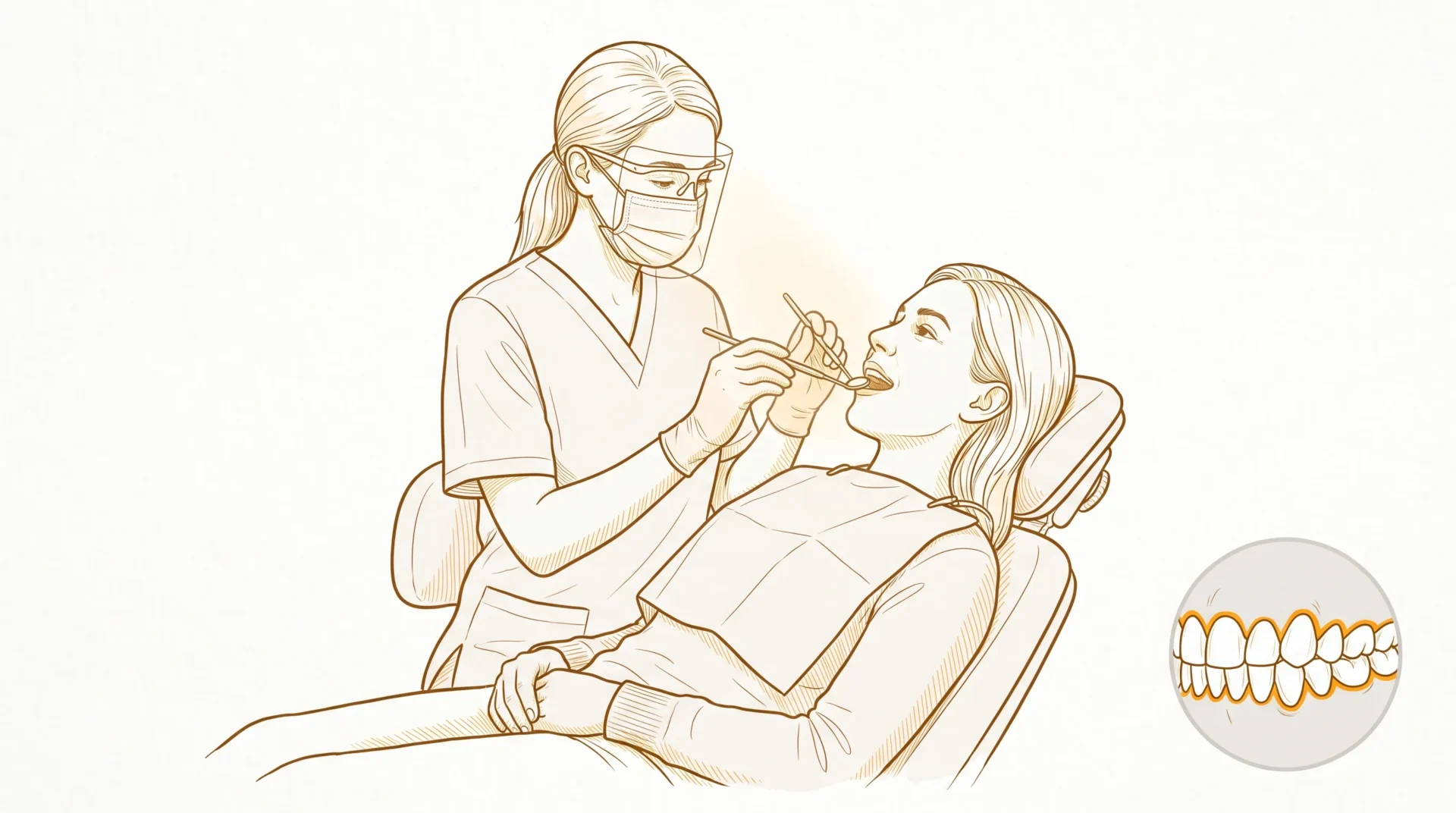
Your bite, also called occlusion, is the way your upper and lower teeth meet. During an exam, your dentist may look at how your teeth come together, whether there is uneven wear and whether any teeth appear overloaded. They may also ask about jaw clicking, jaw locking, morning headaches, facial muscle tenderness or clenching.
Dental professionals may check for signs of tooth grinding, known as bruxism. These signs can include flattened tooth edges, small cracks, chipped enamel, sensitive teeth or tight jaw muscles. Bruxism can have several contributing factors, and not everyone with tooth wear needs the same care.
If bite or jaw issues are suspected, your dentist may discuss options such as monitoring, adjusting habits, managing contributing factors or using an occlusal splint where suitable. An occlusal splint is a custom-made appliance worn over the teeth, often at night, to help manage grinding forces. Suitability depends on your oral health, symptoms and examination findings.
X-rays, photographs and other records when needed
Not every oral health exam requires X-rays, but they can be useful when a dentist needs information that cannot be seen directly. Dental X-rays may help assess decay between teeth, bone levels around teeth, infection, impacted teeth, wisdom teeth position or the condition of previous dental work.
Your dentist should explain why an X-ray is recommended and how the information may affect diagnosis or treatment planning. If you are pregnant, have recent X-rays from another clinic or have concerns about radiation exposure, let your dental team know so this can be considered.
Photos or digital scans may also be used in some appointments. These records can help show tooth wear, cracks, gum changes or treatment options more clearly. They can also provide a reference point for monitoring changes over time.
Integrated Dental Care has more information about the types of records and technology that may be used in modern dental visits. The exact tools used will depend on your symptoms, oral health and the clinical reason for collecting the record.
How the exam is adapted for children and families
Children’s oral health exams often focus on development, prevention and building familiarity with dental care. Your dental team may check tooth eruption, brushing habits, diet, thumb sucking, mouth breathing, early orthodontic concerns and whether fissure sealants or fluoride advice may be suitable.
For families, dental professionals may also look for patterns that affect everyone at home, such as frequent snacking, sports drink use, shared brushing challenges or difficulty flossing around crowded teeth. Advice should be practical and age-appropriate rather than overwhelming.
Children’s appointments are not only about finding cavities. They can help parents understand what is normal for a child’s stage of growth and when changes may need monitoring. If your child is anxious, telling the clinic beforehand can help the team plan a calmer visit.
For broader age-based advice, Integrated Dental Care’s guide to family dental care tips for every stage of life covers babies, children, teens, adults and older adults.
What happens after the examination
After the exam, your dentist should explain the findings in plain language. You can ask which issues need attention soon, which can be monitored and what may happen if no treatment is done. This helps you make informed decisions without feeling rushed.
If treatment is recommended, your dentist can discuss possible benefits, risks, limitations, alternatives and likely appointment steps. Costs and payment options should also be explained before treatment begins. Treatment outcomes and experiences vary between patients, so a personalised assessment is needed before deciding what is suitable.
A clear plan may include:
- Preventive advice for brushing, flossing, fluoride or diet
- A professional clean, if clinically appropriate
- Monitoring of early changes
- Restorative treatment such as a filling or crown assessment
- Further assessment for gum disease, bite concerns or wisdom teeth
- Referral when specialist care may be appropriate
An oral health exam can also be a useful time to raise cosmetic concerns, such as tooth colour, worn edges or spacing. Your dentist should first assess oral health, then explain whether cosmetic options can be considered and what limitations may apply.
When to book sooner than your usual check-up
Routine exam timing varies between patients. Some people are advised to attend more often because of gum disease, high decay risk, dry mouth, orthodontic treatment, complex dental work or medical factors. Others may be suitable for longer intervals if their oral health is stable.
You should consider booking sooner if you notice ongoing pain, swelling, bleeding, a broken tooth, a loose adult tooth, an ulcer that does not heal, a lump, difficulty opening your mouth or discomfort after dental trauma. These symptoms do not always mean something serious, but they deserve professional assessment.
For Pakenham locals, a dental examination can help determine the likely cause of symptoms and whether general, emergency or further dental care may be appropriate.
Frequently Asked Questions
How long does an oral health exam take? The time can vary depending on your needs, symptoms and whether X-rays, cleaning or treatment planning are included. A straightforward check may be shorter, while a more complex appointment may take longer.
Do dental professionals check for oral cancer at every exam? Many routine oral health exams include a soft tissue check of the lips, cheeks, tongue, palate and other areas of the mouth. If something needs closer review, your dentist can explain whether monitoring, further tests or referral may be appropriate.
Will I need X-rays at every dental check-up? Not necessarily. X-rays are recommended when they are clinically justified, such as when your dentist needs information that cannot be seen during a visual exam. Your dental team should explain the reason before taking them.
Can a dental exam find the cause of bad breath? Sometimes. Bad breath can be linked to plaque, gum inflammation, tooth decay, dry mouth, diet, smoking or other health factors. Your dentist can assess common oral causes and advise whether medical follow-up may also be needed.
What should I tell my dentist before the exam? Mention any pain, sensitivity, bleeding, mouth ulcers, jaw symptoms, recent dental trauma, medical conditions, medications, allergies or pregnancy. It is also useful to share any worries you have about treatment.
Booking an oral health exam in Pakenham
If it has been a while since your last check-up, or if you have noticed a change in your teeth, gums or mouth, an oral health exam can provide clear information about what is happening. Your dentist can assess your oral health, explain findings and discuss options that may be appropriate for your circumstances.
To discuss your concerns, you can book an appointment with the team at Integrated Dental Care in Pakenham. If you have pain, swelling, trauma or another urgent concern, mention this when booking so the appointment can be arranged appropriately.
Disclaimer
The information provided on this website is for general informational and educational purposes only. It is not intended to replace professional dental advice, diagnosis or treatment. Dental needs and treatment outcomes vary between individuals. Always seek advice from a qualified dental practitioner regarding your specific circumstances before making decisions about your oral health or treatment. A consultation and clinical assessment are required to determine which treatment options may be suitable for you. All dental procedures carry potential risks and benefits, which will be discussed with you before treatment.