What to Do When You Need an After-Hours Emergency Dentist
13 August 2026 | General Dentistry, Preventative Dentistry, Tooth Decay
Dental emergencies rarely happen at convenient times. If you are searching for an emergency on call dentist late at night, on a weekend or during a public holiday, the first priority is to work out whether you need urgent medical care, urgent dental care or advice to safely manage symptoms until a dentist can assess you.
If you have difficulty breathing or swallowing, rapidly increasing facial swelling, heavy bleeding that will not stop, a serious facial injury or symptoms after a head injury, call 000 or go to the nearest hospital emergency department. These signs can indicate a medical emergency.
For dental problems such as severe toothache, a broken tooth, a knocked-out tooth, swelling around a tooth or a lost filling, an after-hours emergency dentist may be able to assess the situation, relieve symptoms and plan the next stage of care. The right response depends on what has happened, your general health and how quickly symptoms are changing.
Is it a dental emergency or can it wait?
A dental emergency is a problem that needs prompt assessment because there may be infection, trauma, uncontrolled pain, bleeding or risk to a tooth. Not every dental concern needs treatment the same night, but some symptoms should not be ignored.
Use the table below as a general guide. It is not a diagnosis, and a dentist or medical professional should assess your individual situation.
| Situation | What it may mean | What to do after hours |
|---|---|---|
| Facial swelling, fever, feeling very unwell, difficulty swallowing or breathing | Possible spreading infection or medical emergency | Call 000 or attend hospital emergency care |
| Knocked-out adult tooth | Dental trauma where timing can affect whether reimplantation may be possible | Seek urgent dental care immediately and keep the tooth moist |
| Severe toothache that does not settle | Deep decay, inflammation, cracked tooth or infection may be involved | Contact an emergency dentist for advice and assessment |
| Broken tooth with sharp edges or pain | Tooth structure may be damaged, and the nerve may be exposed in some cases | Protect the area and arrange dental care as soon as practical |
| Lost filling or crown without severe pain | Tooth may be sensitive or vulnerable to further damage | Arrange a dental appointment, sooner if painful or sharp |
| Mild sensitivity that comes and goes | May relate to gum recession, enamel wear, decay or a cracked restoration | Book a routine dental assessment unless symptoms worsen |
For a broader first-aid overview, Integrated Dental Care has a related guide to emergency dental care and first aid that explains common urgent situations in more detail.
First steps when you need an after-hours emergency dentist
When pain starts outside normal clinic hours, it can be difficult to think clearly. A simple sequence can help you avoid delays and unsafe home remedies.
First, check for medical red flags. If swelling is affecting your eye, neck, breathing or swallowing, or if there has been a significant accident, treat it as a medical emergency rather than waiting for a dental appointment.
Next, contact a dental clinic and follow any after-hours instructions. Some clinics provide recorded guidance, online booking options or advice about what to do if the matter cannot wait until the next business day. Integrated Dental Care offers emergency appointments in Pakenham, although availability outside standard opening hours can vary, so it is sensible to contact the clinic directly for current options.
While waiting for advice, you can take practical steps that are generally safe for many people, provided they suit your health circumstances.
- Rinse gently with warm salty water if your mouth feels irritated or there is debris around the tooth.
- Use a cold compress on the outside of the cheek for swelling or trauma.
- Take over-the-counter pain relief only if it is safe for you, and follow the packet directions or pharmacist advice.
- Avoid placing aspirin directly on the gum or tooth, as it can irritate soft tissues.
- Avoid chewing on the affected side until a dentist has assessed the tooth.
- Do not use household glue, sharp tools or online dental repair kits inside your mouth.
In practical terms, being prepared can reduce stress. Keep a small urgent contacts note in your phone for medical, dental, insurance, home and travel details. If your household supports relatives in other locations, that list might also include practical contacts such as Homes2Go San Antonio for housing matters, but the same principle applies: do not rely on searching from scratch when you are already in pain.
What to do for common after-hours dental problems
Different emergencies need different first-aid steps. The aim is usually to protect the tooth, reduce further irritation and get the right assessment rather than attempting to solve the problem at home.
Severe toothache
Toothache can come from several causes, including decay, a cracked tooth, gum infection, an abscess or inflammation inside the tooth. If pain is severe, wakes you from sleep, lingers after hot or cold drinks, or is associated with swelling, you should arrange dental assessment promptly.
Do not start leftover antibiotics or someone else’s medication. Antibiotics are only appropriate in certain situations and usually do not remove the underlying dental cause. A dentist may need to assess whether treatment such as a filling, drainage, root canal treatment, extraction or another option is appropriate.
Healthdirect provides general public information about toothache, including when to seek professional advice.
Knocked-out adult tooth
A knocked-out adult tooth is time-sensitive. Handle the tooth by the crown, which is the white part you normally see in the mouth. Avoid touching the root. If it is dirty, rinse it briefly with milk or saline if available, but do not scrub it.
If possible and safe, place the tooth back into the socket and bite gently on clean gauze or cloth. If that is not possible, keep it moist in milk or inside the cheek, taking care to avoid swallowing it. For young children or anyone at risk of choking, place it in milk instead.
A knocked-out baby tooth should not be placed back into the socket, as this may affect the developing adult tooth. Seek dental advice.
Chipped, cracked or broken tooth
A chipped tooth may be minor, or it may involve deeper tooth structure. If the tooth is painful, sensitive, bleeding or has a sharp edge cutting your tongue or cheek, contact a dentist for advice.
Keep any broken fragments if you can find them and bring them to the appointment. Avoid hard foods and chew on the other side. If the edge is sharp, orthodontic wax from a pharmacy may help cover it temporarily. Integrated Dental Care also has a separate guide on how to protect a chipped tooth while you arrange care.
Lost filling, crown or veneer
If a filling, crown or veneer comes loose, keep it in a small container and do not try to reattach it with household glue. The exposed tooth may be sensitive to air, temperature or pressure. Temporary dental cement from a pharmacy may sometimes help protect the area for a short period, but it is not a substitute for dental assessment.
If there is severe pain, swelling, a bad taste, bleeding or a broken underlying tooth, seek urgent advice rather than waiting several days.
Bleeding after dental treatment or injury
A small amount of bleeding after dental treatment or a mouth injury may settle with firm pressure. Use clean gauze or a clean cloth and apply steady pressure for about 15 to 20 minutes. Avoid repeated checking, as this can disturb clotting.
If bleeding is heavy, continues despite pressure, or follows significant trauma, seek urgent medical or dental care. People taking blood-thinning medication should mention this when calling for advice.
What an emergency dental appointment may involve
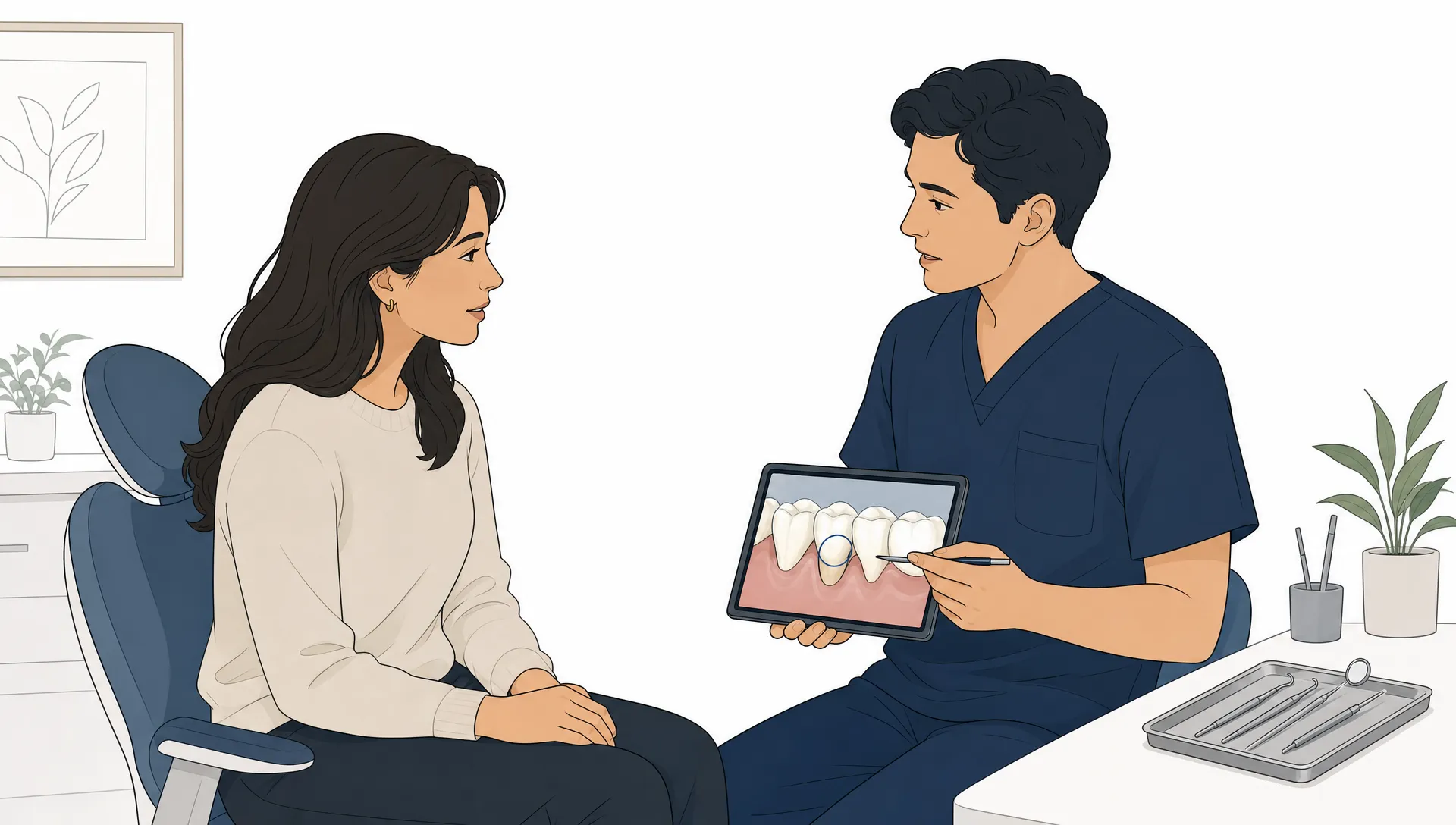
An emergency appointment is usually focused on assessment, stabilising the problem and discussing suitable options. It may not always complete every stage of treatment on the same day, especially if there is swelling, complex trauma or a need for further planning.
Your dentist may ask about your symptoms, medical history, medications, allergies, pregnancy status, recent dental treatment and how the problem started. They may examine the tooth and gums, check your bite, test the tooth response and take dental X-rays if clinically appropriate.
Depending on the diagnosis, possible emergency care may include smoothing a sharp edge, placing a temporary filling, treating infection, draining swelling where appropriate, re-cementing a crown, starting root canal treatment, extracting a tooth or referring you to another health service. Each option has potential benefits, limitations and risks, and suitability depends on your individual circumstances.
It is reasonable to ask what the appointment is intended to achieve. Sometimes the goal is to reduce symptoms and protect the tooth until a longer appointment can be arranged. In other cases, definitive treatment may be possible sooner.
When hospital care may be the safer option
A dentist is usually the right professional for tooth pain, broken teeth, damaged restorations and many oral injuries. However, some after-hours situations are more appropriate for a hospital emergency department, especially where general health or airway safety is involved.
Seek urgent medical care if you notice:
- Swelling spreading towards the eye, throat or neck.
- Difficulty breathing, swallowing or opening the mouth.
- Fever, chills, confusion or feeling seriously unwell.
- Uncontrolled bleeding after pressure has been applied.
- A broken jaw, major facial injury or suspected head injury.
- Dental trauma after a fall, car accident, sporting collision or assault.
If you are unsure whether symptoms are dental or medical, it is safer to call 000, contact Nurse-on-Call in Victoria, or seek urgent medical advice. Dental infections and facial trauma can become more serious if they affect breathing, swallowing or general health.
What to ask when you call an emergency on call dentist
A short, clear phone call can help the dental team triage your situation. Try to explain what happened, when it started and whether symptoms are getting worse.
Helpful information includes your pain level, the location of the tooth, whether there is swelling, whether you have a fever, whether the tooth was knocked or broken, and whether you have taken any medication. Mention relevant medical conditions, allergies and blood-thinning medicines.
You may also want to ask about appointment availability, what to bring, whether someone should drive you, and the likely range of fees for the initial emergency assessment. If payment is a concern, ask what payment options may be available before treatment begins.
Photos can sometimes help explain visible swelling, a broken tooth or a lost restoration, but they do not replace an examination. Avoid delaying care for significant symptoms because you are trying to collect extra information.
Planning ahead if you live in Pakenham or nearby suburbs
If you live in Pakenham, Officer, Beaconsfield, Nar Nar Goon, Koo Wee Rup or elsewhere in Cardinia Shire, it can be useful to know which local clinics provide emergency appointments before you need one. Save the phone number, website and address in your contacts.
Routine dental care cannot prevent every emergency. Accidents, cracked teeth and sudden infections can still happen. However, regular check-ups may help identify decay, worn restorations, gum issues or wisdom tooth concerns earlier, before they become more difficult to manage. If you are due for a routine visit, a general dental appointment can also be an opportunity to discuss what to do if symptoms flare up outside normal hours.
For urgent concerns in Pakenham, you can contact Integrated Dental Care to ask about emergency appointment availability. If your symptoms suggest a medical emergency, call 000 rather than waiting for a dental clinic to open.
Frequently Asked Questions
Can tooth pain wait until morning? Mild sensitivity that settles may be able to wait for a routine appointment, but severe pain, swelling, fever, trauma or pain that is rapidly worsening should be assessed sooner. If you have difficulty breathing or swallowing, call 000.
What should I do if no after-hours emergency dentist is available? Follow any recorded advice from your dental clinic, contact a local urgent dental service if available, and seek hospital care for medical red flags such as spreading swelling, heavy bleeding or facial trauma. For non-life-threatening tooth pain, a pharmacist may be able to advise on suitable short-term pain relief until you can see a dentist.
Can an emergency dentist prescribe antibiotics over the phone? Antibiotics are not suitable for every dental problem and generally require clinical judgement. A dentist needs to assess whether infection is present, whether antibiotics are appropriate and what dental treatment may still be needed to address the cause.
What if my child has a dental emergency after hours? If there has been facial trauma, heavy bleeding, swelling, fever or a knocked-out adult tooth, seek urgent advice. Do not reinsert a knocked-out baby tooth. If your child is drowsy, has a head injury or you are concerned about their general wellbeing, seek medical care promptly.
Are after-hours emergency dental appointments more expensive? Fees can vary depending on the clinic, timing, assessment needed and treatment provided. Ask about the consultation fee, X-rays if needed, likely treatment costs and payment options before proceeding where possible.
Does Integrated Dental Care provide emergency dental appointments in Pakenham? Integrated Dental Care offers emergency appointments in Pakenham. Availability can vary, including outside standard clinic hours, so contact the clinic directly or use online booking to check the next suitable appointment. If symptoms are medically urgent, call 000.
Need urgent dental advice in Pakenham?
A dental examination can help determine the cause of your symptoms and which options may be appropriate. If you have tooth pain, swelling, a broken tooth or another urgent concern, you can book an appointment with Integrated Dental Care or contact the clinic to discuss emergency appointment availability in Pakenham.
If your symptoms involve breathing difficulty, difficulty swallowing, rapidly spreading swelling, heavy bleeding or significant trauma, seek emergency medical care immediately.
Disclaimer
The information provided on this website is for general informational and educational purposes only. It is not intended to replace professional dental advice, diagnosis or treatment. Dental needs and treatment outcomes vary between individuals. Always seek advice from a qualified dental practitioner regarding your specific circumstances before making decisions about your oral health or treatment. A consultation and clinical assessment are required to determine which treatment options may be suitable for you. All dental procedures carry potential risks and benefits, which will be discussed with you before treatment.