

Finding a New Dentist After Moving to Pakenham
21 September 2026 | Children's Dentistry, General Dentistry, Preventative Dentistry
Moving to Pakenham is a good time to choose a new dentist before a toothache, broken filling or children’s dental concern makes the decision feel rushed. A suitable local clinic should be convenient, clear about appointment types and fees, respectful of your preferences and able to explain your options after assessing your oral health.
For many families in Melbourne’s south east, dental care is one of the practical health routines to reset after a move. You may need to transfer records, understand which services are available locally and work out whether to book a routine check-up, a focused consultation or an emergency appointment.
Start by matching the clinic to your actual needs
Before comparing clinics, make a short list of what you are likely to need in the next 6 to 12 months. This may include a routine check-up and clean, a review of existing fillings or crowns, children’s appointments, cosmetic questions, orthodontic treatment such as Invisalign or help with a dental problem that has been put off during the move.
A practical approach is to choose a clinic that can assess your oral health first, then explain whether treatment is recommended and what alternatives may be available. Not every person needs the same treatment, and suitability depends on factors such as your dental history, medical history, mouth anatomy, budget, timeframes and personal goals.
If you are comparing several local options, Integrated Dental Care has a separate guide on choosing a dental clinic in Pakenham that covers registration, communication, costs and access in more detail.
How do you choose a new dentist after moving?
A good first step is to check whether the clinic’s services, appointment availability and communication style suit your household. If you are looking for a new dentist after relocating, the most useful questions are usually practical rather than cosmetic.
Consider whether the clinic offers general dentistry for ongoing care, appointments for urgent dental concerns, children’s dentistry if you have a family and consultations for treatments you may be thinking about in future. You may also want to ask how the clinic explains fees, payment options, treatment risks and alternatives before you agree to any care.
Location matters too. If you live in Pakenham, Officer, Beaconsfield, Nar Nar Goon, Koo Wee Rup or elsewhere in Cardinia Shire, think about school pick-up times, commuting routes, parking, public transport and whether appointments are realistic to attend. A clinic that is easy to get to may make routine dental care simpler to maintain.
Check appointment types before you book
Different dental concerns need different appointment types. Booking the right visit helps the dental team allow enough time and prepare for your concern.
| Situation | Appointment that may be suitable | Why it matters |
|---|---|---|
| You have no current symptoms | Routine check-up and clean | Allows your dentist to assess teeth, gums and existing dental work |
| You have pain, swelling or a broken tooth | Urgent dental appointment | Helps assess the cause and discuss appropriate next steps |
| You want to discuss whitening, veneers or aligners | Cosmetic or orthodontic consultation | Allows a health assessment before discussing aesthetic options |
| Your child is due for care | Children’s dental appointment | Gives the dentist time to assess age-appropriate needs and eligibility questions |
| You have missing teeth or loose dentures | Restorative consultation | Helps explore options such as dentures, bridges or dental implants where suitable |
When comparing clinics, ask whether your new dentist can see you for both routine care and more focused concerns, or whether you may need referral for some services. Referral is a normal part of healthcare when a procedure or condition requires another practitioner’s input.
If you are unsure which visit to choose, this guide on when to book a check-up or consultation explains how to match common concerns with the right appointment type.
Transfer your dental records and health details
Your previous dental records can help your new clinic understand past treatment, although your dentist will still need to examine your mouth before giving advice. Useful records may include recent X-rays, notes about crowns or implants, periodontal charting for gum health and details of major treatment.
You can usually contact your previous clinic and ask how they release records. Some clinics send them directly to your new clinic with your consent. You may also need to provide your current medical history, allergies, medications and any relevant health conditions such as diabetes, heart conditions, pregnancy or osteoporosis treatment.
If you have moved from overseas, your relocation folder may also include non-dental contacts such as insurers, migration advisers or overseas legal firms like Henlin Gibson Henlin; keep those documents separate from health information so your dental team receives only clinically relevant records.
A new dentist may request updated X-rays if previous images are unavailable, outdated or not suitable for the concern being assessed. X-rays are only one part of diagnosis, and your dentist should explain why they are recommended before taking them.
Know what may happen at your first appointment
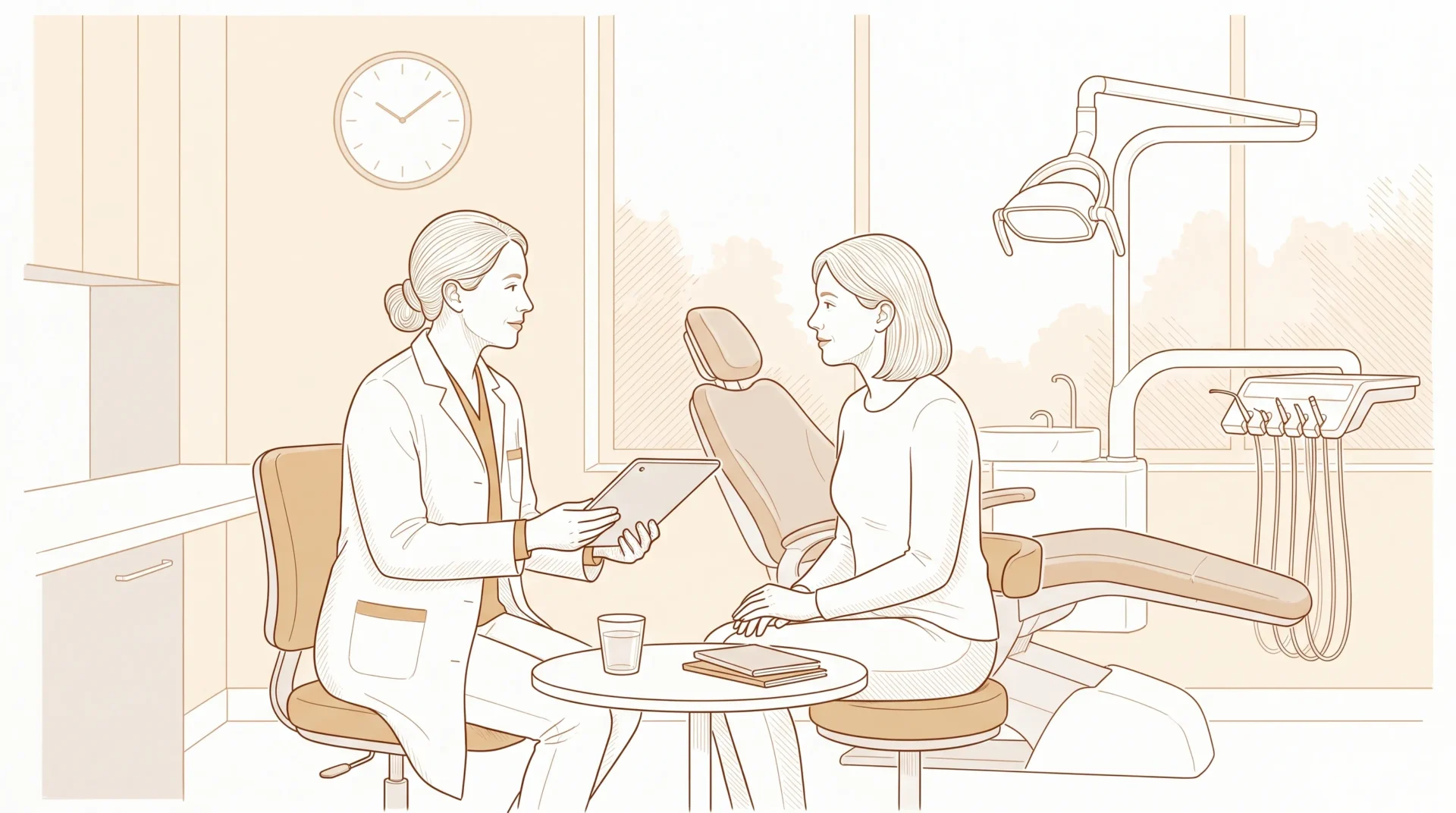
A first appointment is usually about building a clear picture of your oral health. The exact process varies depending on why you booked and whether you have symptoms.
For a routine visit, your dentist may ask about your dental history, medical history, current concerns and goals. They may examine your teeth, gums, bite, jaw joints, soft tissues and existing dental work. A professional clean may be provided if appropriate, or it may be scheduled separately if more time is needed.
For a problem-focused visit, such as toothache or a broken tooth, the appointment may concentrate on the immediate concern. Your dentist may test the tooth, check the gums, take an X-ray if needed and explain likely causes. Treatment options, risks, costs and timing should be discussed before you decide what to do next.
Your first visit with a new dentist is also a chance to ask how the clinic handles recalls, emergency concerns, children’s appointments, payment plans and referrals. Clear communication at this stage can make future care easier to manage.
Ask about fees, payment options and children’s dental care
Dental costs can vary because treatment plans differ between patients. A filling, crown, implant consultation, Invisalign assessment or whitening appointment can involve different materials, appointment times and clinical considerations.
Before starting treatment, ask for an estimate and make sure you understand what is included. If several options are appropriate, your dentist can explain the potential benefits, limitations and risks of each option. You can also ask whether treatment can be staged, whether a payment plan is available and whether private health insurance item numbers can be provided for you to check with your fund.
Integrated Dental Care offers interest-free payment plans and bulk-billed kids dental options. Eligibility for children’s dental benefits depends on individual circumstances, so it is worth asking the clinic what information you need to bring when booking a child’s appointment.
If online booking suits your schedule, this article on how to book a dentist online with confidence explains how to choose an appointment type and what details to include in your booking notes.
Look for communication that supports informed decisions
Good dental communication should feel clear, respectful and unhurried. You should be able to ask why a treatment is recommended, what may happen if you wait, what alternatives exist and what risks or maintenance may be involved.
A new dentist should not pressure you into treatment that you do not understand. For non-urgent care, it is reasonable to take time to consider your options, review written information and ask follow-up questions. For urgent dental problems, your dentist may focus first on assessing symptoms and helping you manage the immediate issue safely.
This is particularly important for cosmetic dentistry. Treatments such as teeth whitening, veneers, bonding and aligners may help improve the appearance of teeth for suitable patients, but they are still dental procedures with possible risks, limitations and maintenance needs. Oral health should be assessed before cosmetic options are considered.
Know when to seek prompt dental advice
Some dental concerns can wait for a routine appointment. Others should be assessed promptly because they may worsen or indicate infection, trauma or damage to a tooth.
Contact a dental clinic for timely advice if you have:
- Facial swelling, gum swelling or a pimple-like swelling near a tooth
- Toothache that is persistent, severe or affecting sleep
- A knocked-out, loose or badly broken adult tooth
- Bleeding that does not settle after pressure
- Pain after a recent dental procedure that is getting worse rather than improving
- A lost filling, crown or bridge causing pain or sharp edges
If swelling affects breathing, swallowing or your ability to open your mouth, or if you feel seriously unwell, seek urgent medical care. In an emergency, call 000 or attend a hospital emergency department.
For dental problems outside usual hours, Integrated Dental Care has guidance on what to do when you need an after-hours emergency dentist, including first steps for common situations.
Make your first booking easier
Once you have chosen a new dentist, a few details can help the first visit run more smoothly. Bring your Medicare card for children if relevant, private health insurance details if you have cover, a list of medications and any recent dental records or X-rays.
If you feel nervous about dental treatment, mention this when booking. Many people have dental anxiety, and it can help the dental team explain the appointment at a comfortable pace. You can also ask whether a consultation can be used first to discuss concerns before any treatment is planned.
For families, consider whether appointments need to fit around school, work or childcare. For older adults or people with mobility needs, ask about access and appointment timing. These practical details are not minor; they can affect whether dental care feels manageable after a move.
FAQ
How soon should I see a dentist after moving to Pakenham? If you are not having symptoms, booking a routine check-up within a timeframe that matches your usual recall pattern is reasonable. If you have pain, swelling, trauma or a broken tooth, contact a dental clinic sooner for advice.
Do I need my old dental records before booking? No, you can usually book without them. Records may help your dentist understand previous treatment, but a clinical examination is still needed before advice or treatment planning.
Can I see a new dentist for only one problem? Yes, you can book a focused consultation for a specific concern such as toothache, a broken tooth or a cosmetic question. Your dentist may still ask about your general health and dental history because these can affect treatment options.
What should I ask before agreeing to treatment? Ask why the treatment is recommended, what alternatives may be available, what the risks and limitations are, how long it may take, what maintenance may be needed and what the estimated costs are.
Is cosmetic dental treatment suitable for everyone? No. Suitability depends on oral health, tooth structure, gum condition, bite, medical history and the outcome you are seeking. A dental assessment is needed before options such as whitening, veneers, bonding or aligners can be recommended.
Arranging dental care after your move
Finding dental care after a move does not need to be rushed. Start with the services you need, check appointment options, gather records where possible and choose a clinic that explains care clearly.
If you are looking for dental care in Pakenham, Integrated Dental Care offers general, cosmetic and emergency dental appointments, along with children’s dentistry, dental implants, Invisalign treatment, teeth whitening, online booking and payment plan options. A dental examination can help determine the cause of your concerns and which options may be appropriate for your circumstances.
Disclaimer
The information provided on this website is for general informational and educational purposes only. It is not intended to replace professional dental advice, diagnosis or treatment. Dental needs and treatment outcomes vary between individuals. Always seek advice from a qualified dental practitioner regarding your specific circumstances before making decisions about your oral health or treatment. A consultation and clinical assessment are required to determine which treatment options may be suitable for you. All dental procedures carry potential risks and benefits, which will be discussed with you before treatment.