
When General and Cosmetic Dentistry May Be Considered
21 September 2026 | Cosmetic Dentistry, General Dentistry, Preventative Dentistry
If you are deciding whether to book a check-up, repair a tooth or discuss the appearance of your teeth, the phrase general cosmetic dentistry may describe what you are looking for: dental care that considers oral health, function and appearance together. It does not mean every patient needs cosmetic treatment. It means a dentist can first assess your mouth and then discuss options that may be appropriate for your needs, goals, budget and health history.
For many people in Pakenham and the surrounding Cardinia Shire, the question is not simply “Do I need cosmetic dentistry?” A more useful question is, “Is there a dental health issue that should be managed first, and are there appearance-related options I can consider at the same time?”
What do general and cosmetic dentistry involve?
General dentistry focuses on maintaining oral health, treating disease and helping teeth and gums function comfortably. It may include check-ups, cleans, X-rays when needed, fillings, gum care, root canal treatment, children’s dentistry and advice about home care. If you want a broader overview, Integrated Dental Care has a guide to general dentistry services in Pakenham.
Cosmetic dentistry focuses on the appearance of teeth and gums. This may include teeth whitening, composite bonding, veneers, crowns, orthodontic options such as Invisalign and treatment planning for a broader cosmetic dental plan. Cosmetic care should still be built on a healthy foundation, because untreated decay, gum disease or bite issues can affect suitability and long-term maintenance.
Some patients only need general care. Some only want to discuss appearance. Others may benefit from a combined plan, where dental health, function and aesthetics are considered together.
When general cosmetic dentistry may be considered
A combined approach may be considered when a dental concern affects both health and appearance. For example, a chipped tooth may need assessment to check whether the tooth is structurally sound, then cosmetic options may be discussed if repairing its appearance is also important to you.
A general cosmetic dentistry discussion may also be useful when older fillings, crowns or restorations are wearing down or no longer matching nearby teeth. The first step is not choosing a material or colour. It is checking whether the tooth, gum and bite are stable enough for any proposed treatment.
Common situations where a combined plan may be discussed include:
- Chipped, worn or cracked teeth
- Stained teeth where whitening may or may not be suitable
- Gaps, crowding or rotated teeth
- Old fillings or crowns that need review
- Missing teeth where replacement options may be considered
- Gum inflammation, decay or sensitivity before cosmetic work
These concerns do not automatically mean treatment is required. A dental examination can help clarify what is happening and whether monitoring, preventive care, restorative treatment or cosmetic options may be suitable.
Why oral health usually comes first
Cosmetic treatment is generally more predictable when the mouth is healthy. If decay, gum disease, active infection or uncontrolled grinding is present, your dentist may recommend addressing those issues before appearance-based treatment. This is not about delaying care unnecessarily. It is about reducing avoidable complications and helping you understand the likely maintenance involved.
For example, whitening may not be suitable if sensitivity is severe or if decay is present. Veneers or crowns may not be appropriate until gum health has improved. Orthodontic treatment may require a careful review of bone levels, gum health and oral hygiene.
| Concern | General dental focus | Cosmetic discussion that may follow | Why assessment matters |
|---|---|---|---|
| Chipped tooth | Check for cracks, decay or bite stress | Bonding, veneer or crown options | Treatment depends on tooth structure and bite |
| Staining | Identify surface stain, internal discolouration or restoration colour | Whitening or replacement of visible restorations | Whitening does not change the colour of crowns or fillings |
| Crowded teeth | Assess gum health, tooth wear and cleaning access | Invisalign or other orthodontic options | Tooth movement suitability varies between patients |
| Old filling | Check leakage, decay or fracture risk | Tooth-coloured replacement or crown if appropriate | Removing and replacing restorations affects tooth structure |
This is one reason a cosmetic consultation often includes a general dental examination. The aim is to understand the whole picture before discussing a plan.
What an appointment may involve
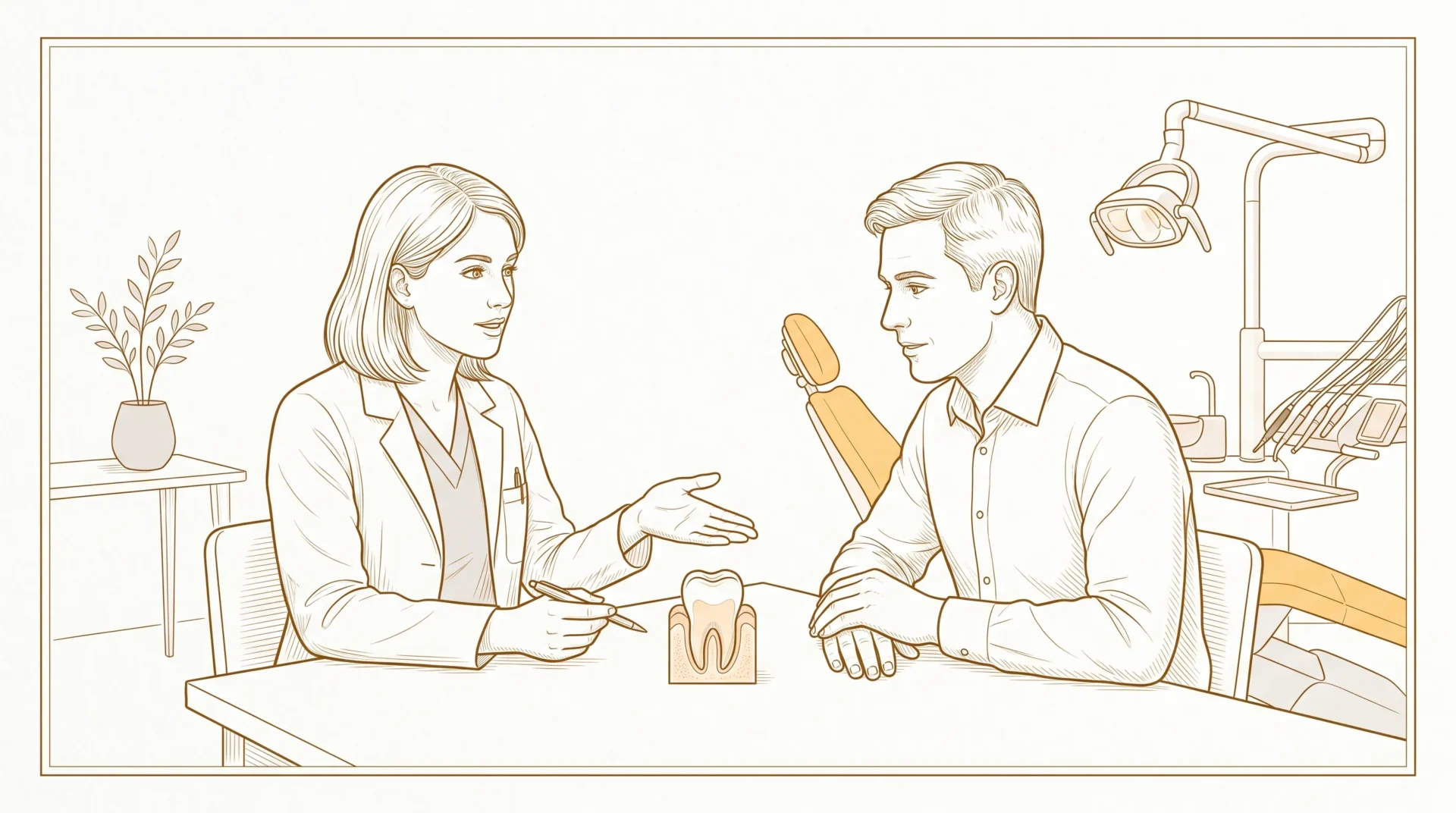
A first appointment for combined care is usually a conversation and assessment rather than a commitment to treatment. Your dentist may ask about your dental history, medical history, symptoms, concerns and what you would like to understand or change.
Depending on your circumstances, the visit may include an examination of the teeth, gums, bite and existing restorations. Dental X-rays, photographs or digital scans may be recommended if they are relevant to diagnosis or planning. Integrated Dental Care explains similar steps in its article on what modern dentistry may include at your dental visit.
After the assessment, your dentist can explain possible options, including doing nothing for now, monitoring a concern, preventive care, restorative treatment or cosmetic treatment. A general cosmetic dentistry plan should also cover limitations, risks, maintenance and costs before you decide whether to proceed.
Treatment options that may be discussed
The options considered will depend on your oral health, the condition of your teeth and what you want to achieve. A dentist may discuss one treatment or a staged plan that starts with health and function before appearance.
Teeth whitening may be considered for some types of tooth discolouration, although it is not suitable for every patient and does not whiten existing crowns, veneers or fillings. Composite bonding may be discussed for small chips, uneven edges or minor shape concerns, but it can stain or chip over time and may need maintenance.
Veneers and crowns may be considered when more coverage or structural support is needed, but these treatments can involve removing tooth structure. Orthodontic options such as Invisalign may be suitable for some alignment concerns, although treatment time, retention and biological limits need to be discussed.
For patients thinking about several appearance-related changes, a broader plan may be helpful. The Integrated Dental Care article on a cosmetic dentistry smile makeover explains how multiple options may be considered together without assuming that every person needs the same treatment.
Benefits, limitations and risks to understand
Dental treatment can have potential benefits, but no outcome should be treated as guaranteed. Possible benefits may include improved chewing comfort, easier cleaning, repair of damaged teeth or changes to tooth colour, shape or alignment. Whether these apply depends on the person and the treatment.
All dental procedures carry potential risks and limitations. These may include sensitivity, gum irritation, changes to the bite, restoration wear, the need for future replacement or the possibility that a preferred option is not suitable after assessment. Surgical treatments, such as dental implants, involve additional risks that should be discussed carefully before treatment.
When general cosmetic dentistry is elective, it is reasonable to take time to compare options, ask questions and understand what maintenance may be needed. Informed consent is not just signing a form. It means you have had an opportunity to understand the likely benefits, risks, alternatives and costs before making a decision.
How to make an informed decision
A helpful dental plan should match your health needs and your preferences. It should also be realistic about what dentistry can and cannot do. Normal variations in tooth colour, spacing and shape are common, and cosmetic treatment is a personal choice rather than something everyone needs.
You may find it useful to ask your dentist:
- What is causing the concern?
- Are there any health issues that need attention first?
- What are the options, including no treatment for now?
- What are the possible risks and limitations?
- How long might treatment take?
- What maintenance may be needed over time?
- What costs are involved, and are payment options available?
It can also help to keep different types of professional advice separate. Dentists can advise on dental suitability, treatment risks and oral health. If a matter involves legal documents, consent disputes or other legal questions, independent legal advice may be needed, just as someone seeking legal help overseas might contact a practice such as Janssen Van den Biezenbos Advocaten for legal matters within their jurisdiction.
Costs and timing vary between patients
The cost of combined care can vary widely because treatment plans are individual. A simple filling and clean is very different from orthodontic treatment, veneers, implant treatment or a staged plan involving several appointments. The number of teeth involved, materials used, diagnostic records, laboratory work and maintenance needs can all affect cost.
Your dentist should provide an estimate before treatment begins. If several options are suitable, you can ask how they compare in terms of cost, durability, appearance, risks and maintenance. Some patients prefer a staged approach, where urgent or health-related care is completed first and elective cosmetic treatment is considered later.
Integrated Dental Care offers payment plans, and families can ask about bulk-billed kids dental options where relevant. Eligibility, item numbers and out-of-pocket costs should be checked before treatment, because these details can vary between patients.
When to seek dental advice promptly
Some concerns can wait for a routine appointment, but others should be assessed sooner. Contact a dentist if you have dental pain, swelling, a broken tooth, trauma, a lost filling or crown, bleeding that does not settle or signs of infection. If swelling affects breathing or swallowing, seek urgent medical care.
For non-urgent concerns about appearance, sensitivity or old dental work, an assessment can still be useful. A general cosmetic dentistry consultation can help you understand whether treatment is needed, optional or not recommended at this stage.
People in Pakenham, Officer, Beaconsfield, Nar Nar Goon, Koo Wee Rup and surrounding parts of Melbourne’s south east may prefer to discuss these questions with a local clinic so follow-up care and reviews are easier to manage.
Frequently asked questions
Is general cosmetic dentistry the same as a smile makeover? Not necessarily. A smile makeover usually refers to a broader cosmetic plan involving several appearance-related treatments. General and cosmetic care together may be much simpler, such as treating decay before discussing whitening or repairing a chipped tooth with appearance in mind.
Do I need a check-up before cosmetic dental treatment? In most cases, an assessment is recommended before cosmetic treatment. Your dentist needs to check for decay, gum disease, bite concerns, sensitivity and existing restorations that may affect suitability.
Can cosmetic dentistry improve damaged teeth? Some cosmetic treatments may also restore tooth shape or structure, but suitability depends on the extent of damage and the health of the tooth. A cracked, infected or heavily filled tooth may need restorative care before appearance is considered.
Are results the same for everyone? No. Treatment outcomes, recovery, maintenance and appearance vary between patients. Factors such as enamel, gum health, tooth position, oral hygiene, grinding habits and medical history can affect what is achievable and suitable.
Can I choose to do nothing for now? Sometimes monitoring is a reasonable option, especially if there is no active disease or urgent concern. Your dentist can explain the likely consequences of waiting, along with any preventive steps that may help.
Considering your options in Pakenham
If you are weighing up dental health concerns, appearance goals or both, a dental examination can help determine what is happening and which options may be appropriate. The team at Integrated Dental Care in Pakenham can assess your oral health, explain potential benefits, risks and alternatives and discuss whether general, cosmetic or combined care may suit your circumstances.
You can contact Integrated Dental Care to arrange an assessment and ask questions before making a decision about treatment.
Disclaimer
The information provided on this website is for general informational and educational purposes only. It is not intended to replace professional dental advice, diagnosis or treatment. Dental needs and treatment outcomes vary between individuals. Always seek advice from a qualified dental practitioner regarding your specific circumstances before making decisions about your oral health or treatment. A consultation and clinical assessment are required to determine which treatment options may be suitable for you. All dental procedures carry potential risks and benefits, which will be discussed with you before treatment.