
Questions Berwick Patients Can Ask About Dental Implants
22 October 2026 | General Dentistry, Oral Health
If you are comparing dental implants Berwick clinics offer, ask about more than the price of an implant. The useful questions concern why treatment is recommended, what the complete plan includes, who provides each stage and how follow-up will work. A clinical examination is needed before a dentist can assess whether an implant is suitable for you.
This guide focuses on understanding the answers you receive, so you can compare proposed treatment plans rather than advertised prices alone. It also covers practical questions for Berwick residents considering appointments outside their suburb, including in nearby Pakenham.
Dental implants Berwick patients are considering: what is being replaced?
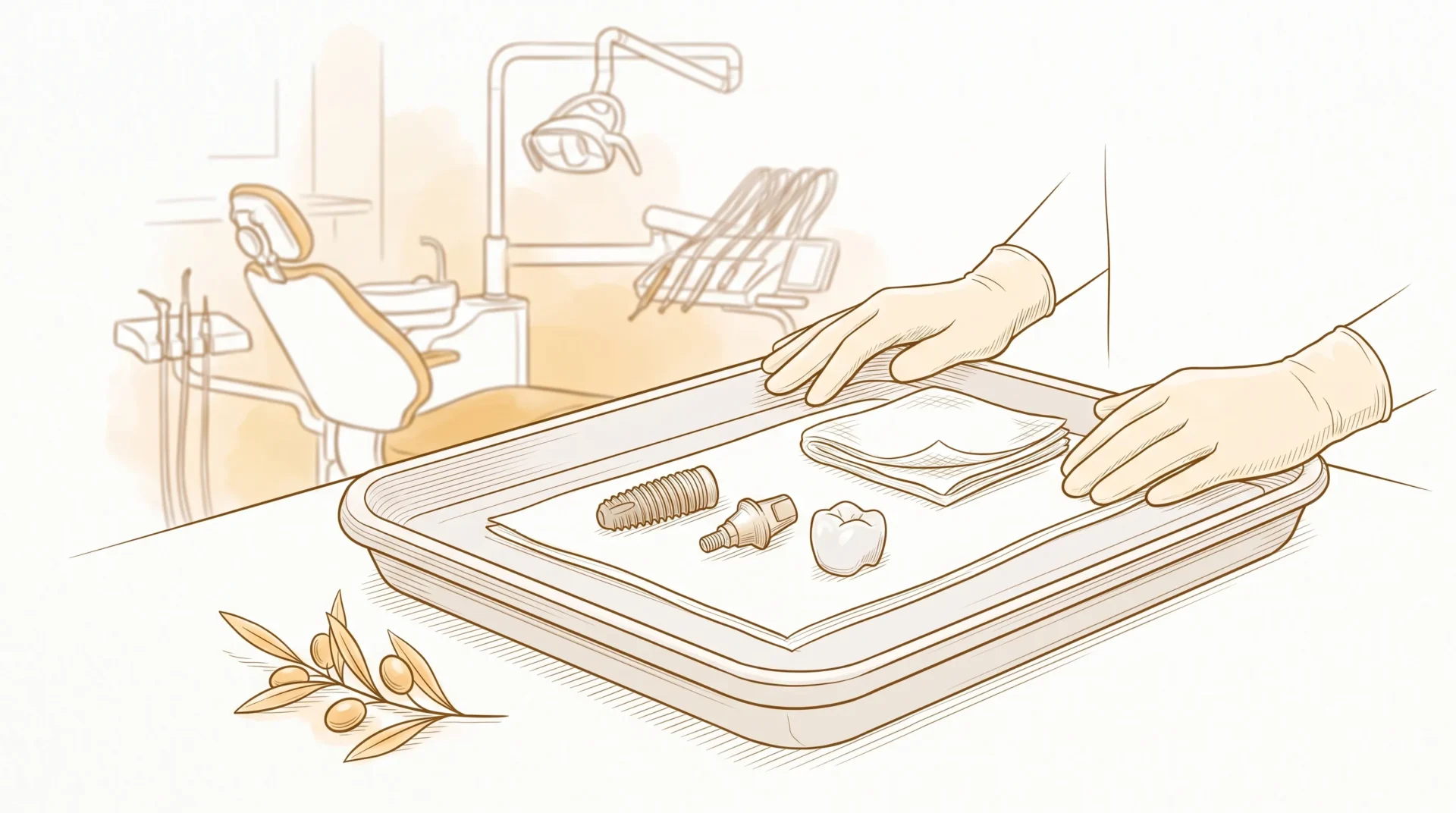
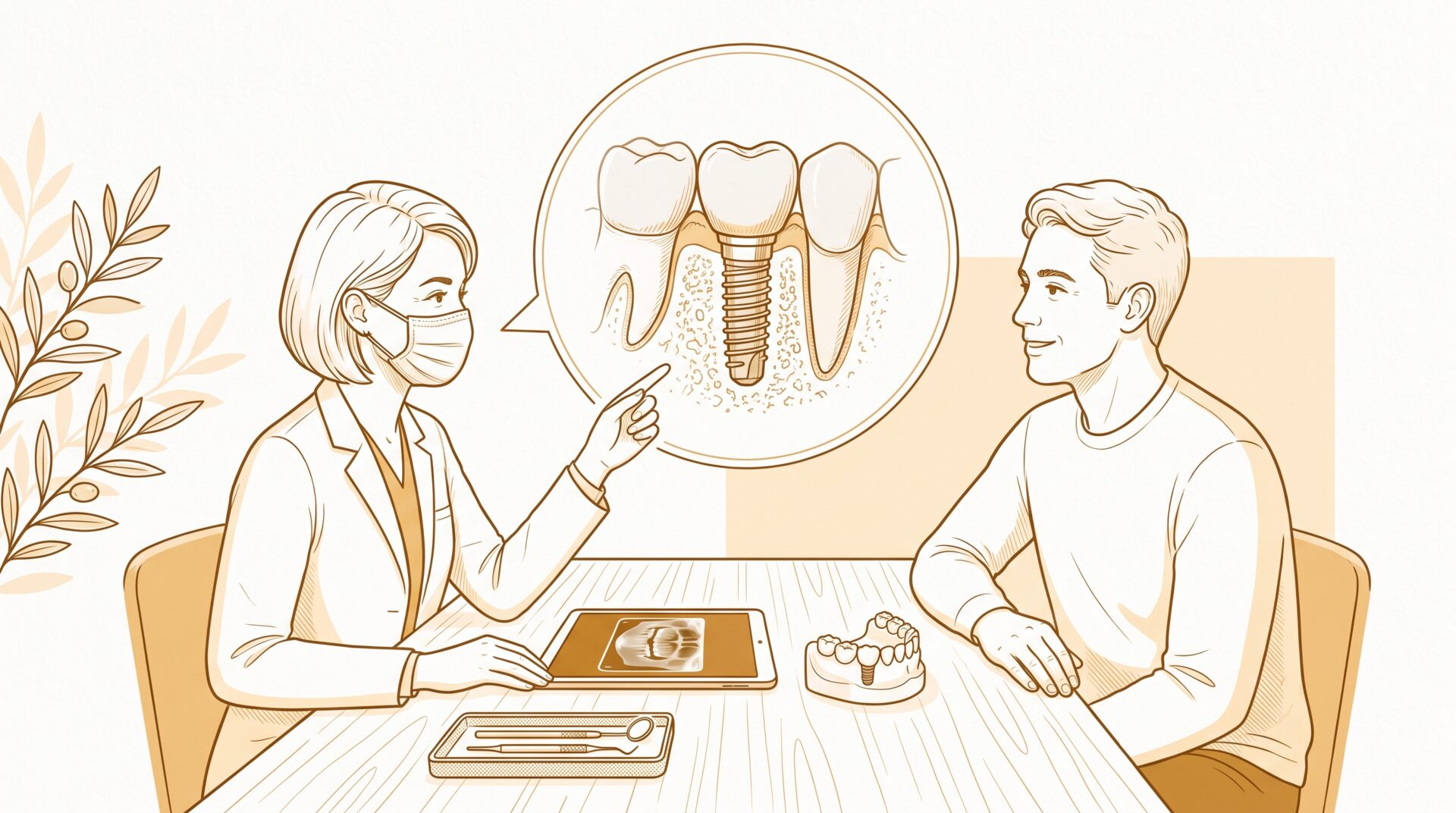
A dental implant is a small post surgically placed in the jawbone to support a replacement tooth or teeth. For a single missing tooth, the finished restoration usually includes the implant, a connector called an abutment and a crown, which is the visible replacement tooth.
These are separate components. When a clinic refers to an “implant”, ask whether it means the surgical post or the complete replacement tooth. Healthdirect’s explanation of dental implant surgery provides an overview of the procedure and suitability considerations.
A useful opening question is: “What problem would this treatment address in my case?” The answer should relate to your oral health, chewing needs and preferences, rather than assuming every missing tooth requires an implant.
If a tooth is still present, ask whether it can reasonably be retained. If it is already missing, discuss other replacement options for missing teeth, such as a bridge or removable denture. In some circumstances, monitoring a gap without replacing it may also be discussed.
What needs to be checked before you recommend treatment?
For dental implants in Berwick or surrounding areas, suitability depends on more than whether there is space for a replacement tooth. Your dentist needs to consider your gums, available bone, bite and general health.
Ask: “Which findings support this recommendation, and is anything still uncertain?” This encourages a clear explanation of what the examination and any imaging have established.
Depending on your circumstances, useful follow-up questions include:
- Does gum disease need treatment before an implant can be considered?
- Is there enough bone, or might a bone graft be needed?
- Could smoking, diabetes or my medicines affect treatment planning or healing?
- Would tooth grinding change the design or maintenance of the replacement tooth?
A bone graft adds material to an area where more bone is needed. It is not required for everyone and may add procedures, healing time and expense.
Bring an up-to-date medication list and relevant medical information. Some medicines require additional planning, but do not stop or change prescribed medication without advice from the appropriate treating clinician.
Who will provide each stage, and where will it happen?
Implant treatment involves both surgical placement and the design and fitting of the replacement tooth. These stages may be provided by one dentist or shared between clinicians, depending on the case.
Before choosing dental implants Berwick providers offer, ask who is responsible for each stage. You can request the clinician’s name, relevant qualifications and an explanation of whether referral is recommended for your circumstances.
The questions are practical: “Who places the implant, who fits the crown and who checks healing?” Also ask who you should contact if a concern arises between appointments.
If care is shared, clarify how information will move between providers and who coordinates the overall plan. A referral is not necessarily a problem, but you should understand whether it involves another location, separate fees or additional appointments.
There is no need to choose treatment at the first consultation. You can ask for time to review the proposed plan or seek another opinion, particularly if extraction or additional surgery is being considered.
What are the risks, and how will discomfort be managed?
All dental procedures carry potential benefits and risks. Implant surgery can involve pain, swelling, bruising, bleeding and infection. An implant may also fail to join adequately with the surrounding bone or develop problems later.
Depending on the implant’s position, risks can include injury to nearby nerves or involvement of the sinus, an air-filled space above some upper back teeth. Your dentist should explain which risks are relevant to your anatomy, rather than relying only on a general consent form.
Ask: “What could go wrong in my case, how would you recognise it and what would happen next?” You should also understand the options and possible costs if an implant does not heal as intended.
For dental implants in Berwick or nearby suburbs, ask how anaesthesia and recovery discomfort would be managed. Local anaesthetic is commonly used, but the appropriate approach depends on the procedure and patient. Do not assume sedation is available or necessary.
Request written aftercare instructions, including who to contact for increasing pain, swelling, persistent bleeding or other concerns. Difficulty breathing or swallowing requires urgent medical attention; call 000.
What does the timeline actually include?
Ask for a staged timeline rather than a single completion date. Assessment, treatment of existing dental problems, extraction, grafting, implant placement and fitting the replacement tooth may occur at different appointments.
Healing periods between stages can extend treatment over several months. The sequence varies, and a dentist may need to adjust the plan after reviewing healing.
A useful question is: “Which parts of the timeline are reasonably predictable, and which depend on how I heal?” This can help you plan work, caring responsibilities and travel without treating an estimate as a promise.
Also ask what happens during the gap between surgery and the final tooth. A temporary replacement may be possible, but its suitability, appearance and function need individual assessment.
An implant placed soon after an extraction is not necessarily ready for normal chewing immediately. Ask when you can eat on that side, return to your usual activities and use any temporary replacement. Follow the treating clinician’s instructions rather than a general online timetable.
What should be included in the written quote?
When comparing dental implants Berwick clinics offer, check that the quotes describe equivalent treatment. A lower advertised starting price may refer to fewer components or exclude procedures that your assessment identifies as necessary.
Request an itemised plan that distinguishes confirmed fees from estimates and identifies costs that depend on further findings.
| Part of the plan | Question to ask |
|---|---|
| Assessment and imaging | Which examinations and scans are included, and why are they needed? |
| Preparatory treatment | Are extraction, gum treatment or bone grafting included if recommended? |
| Implant and replacement tooth | Does the quote include the implant, abutment and final crown? |
| Temporary replacement | Is one proposed, and is there a separate fee? |
| Follow-up and maintenance | Which reviews are included, and what ongoing care is charged separately? |
| Changes or complications | How would additional treatment and fees be discussed? |
Private health insurance benefits depend on your policy, waiting periods, limits and the item numbers used. Ask your insurer to confirm benefits against the proposed treatment rather than relying on a general estimate.
Integrated Dental Care offers interest-free payment plans. Its information on dental payment plans can help you prepare questions, but confirm current eligibility, conditions and whether a plan can cover your proposed treatment. A payment arrangement does not determine whether treatment is clinically appropriate.
How will appointments and follow-up work from Berwick?
The location of ongoing care matters as well as the location of surgery. If you are considering dental implants outside Berwick, ask how many visits are anticipated and where each would take place.
Integrated Dental Care is located in Pakenham, in Melbourne’s south east. Before choosing any clinic outside your suburb, consider whether travel fits your work schedule, transport options and likely review appointments. Do not assume the whole process can be completed in one visit.
Ask: “If I have a concern after treatment, who should I call and where would I be assessed?” Clarify the arrangements for advice outside normal opening hours and what to do if the treating clinician is unavailable.
If sedation is proposed by a treating provider, ask about transport and support requirements. You may need someone to take you home and follow specific restrictions afterwards. These arrangements should be confirmed before the procedure.
What care and costs continue after the final tooth is fitted?
An implant-supported tooth still needs daily cleaning and professional review. Although an implant and crown do not develop tooth decay, the surrounding tissues can become inflamed or infected.
Peri-implantitis is inflammation around an implant associated with loss of supporting bone. It is one reason ongoing monitoring matters, even when the replacement tooth feels comfortable.
For dental implants Berwick patients are considering, ask what maintenance would involve for the proposed design. Your dentist can demonstrate suitable cleaning tools and explain how often reviews may be needed based on your oral health and risk factors. Integrated Dental Care’s guide to caring for dental implants covers everyday maintenance questions.
Implants are not a guaranteed lifetime solution. Crowns, connectors or other components may need adjustment, repair or replacement, and the implant itself can develop complications. Ask which future costs are foreseeable and what any written warranty or practice policy does and does not cover.
Frequently asked questions
Do I need an implant for every missing tooth? No. The options depend on the location and number of missing teeth, your oral health and your preferences. Ask whether a bridge, denture or monitoring the space could be appropriate.
Can I compare implant quotes before an examination? You can gather general information, but an accurate plan usually requires an assessment. Starting prices may not include all the treatment you would need, so compare itemised plans rather than headline figures.
Can I keep seeing my usual dentist? Discuss this with both providers. Shared care may be possible, but responsibility for implant reviews, maintenance and any problems should be clear.
Should I bring anything to the consultation? Bring your medication list, relevant medical information and questions about your priorities. If you have recent dental records or imaging, ask whether the clinic would like these transferred before your appointment.
Discuss your options in Pakenham
If you are considering dental implants from Berwick, an assessment can help clarify whether they are appropriate and what alternatives are available. Integrated Dental Care offers dental implant treatment in Pakenham. You can arrange an appointment to discuss your oral health, the potential benefits and risks, and a treatment plan suited to your circumstances. Treatment outcomes, recovery and experiences vary between patients.
Disclaimer
The information provided on this website is for general informational and educational purposes only. It is not intended to replace professional dental advice, diagnosis or treatment. Dental needs and treatment outcomes vary between individuals. Always seek advice from a qualified dental practitioner regarding your specific circumstances before making decisions about your oral health or treatment. A consultation and clinical assessment are required to determine which treatment options may be suitable for you. All dental procedures carry potential risks and benefits, which will be discussed with you before treatment.